

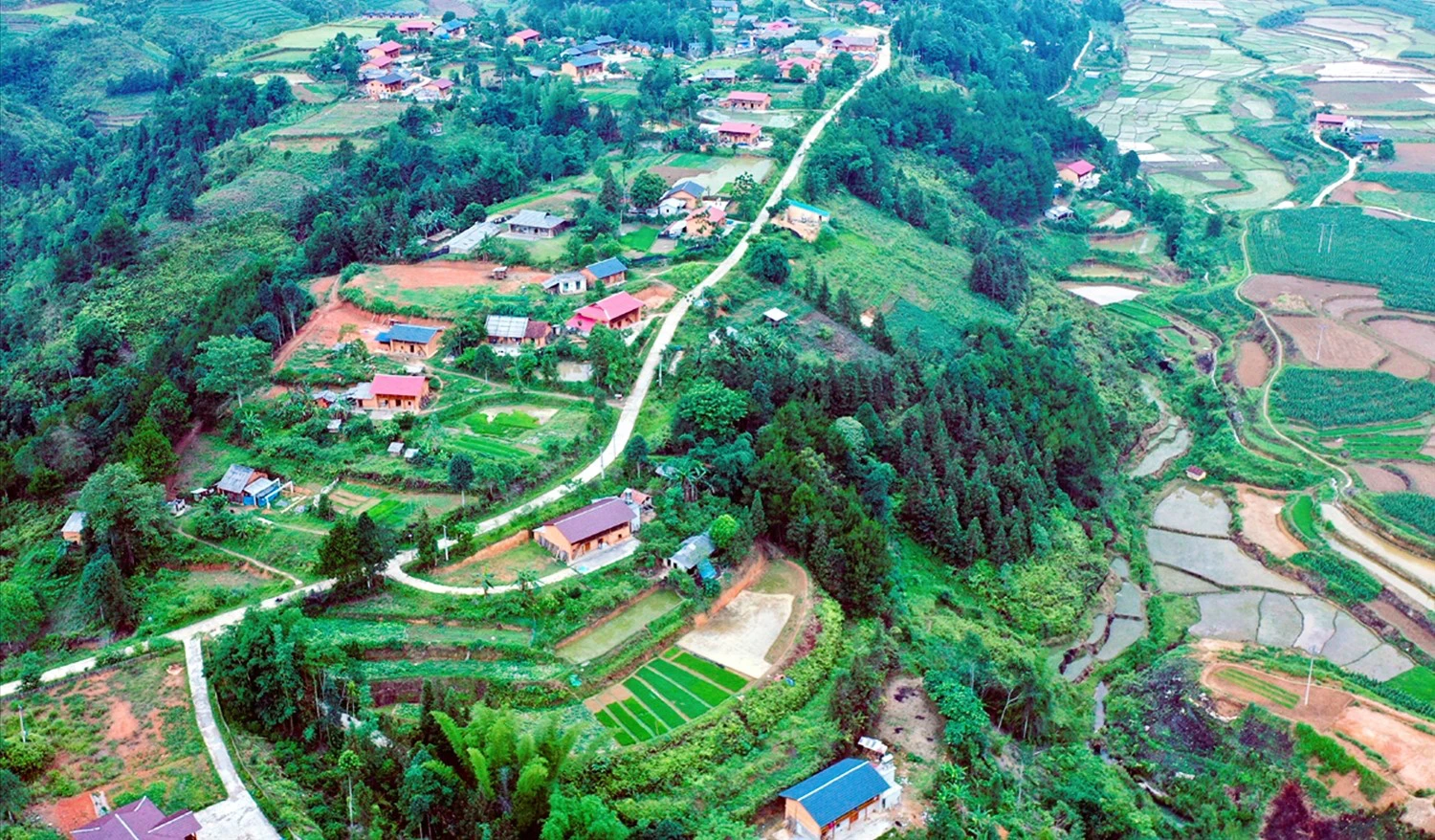
Tucked into the limestone mountains of Quan Ba District, Nam Dam Village is one of the most culturally preserved villages in Ha Giang Province. While many travelers rush through the famous viewpoints of the Ha Giang Loop, those who slow down in Nam Dam discover something deeper: a community where Dao ethnic culture is still practiced in everyday life.
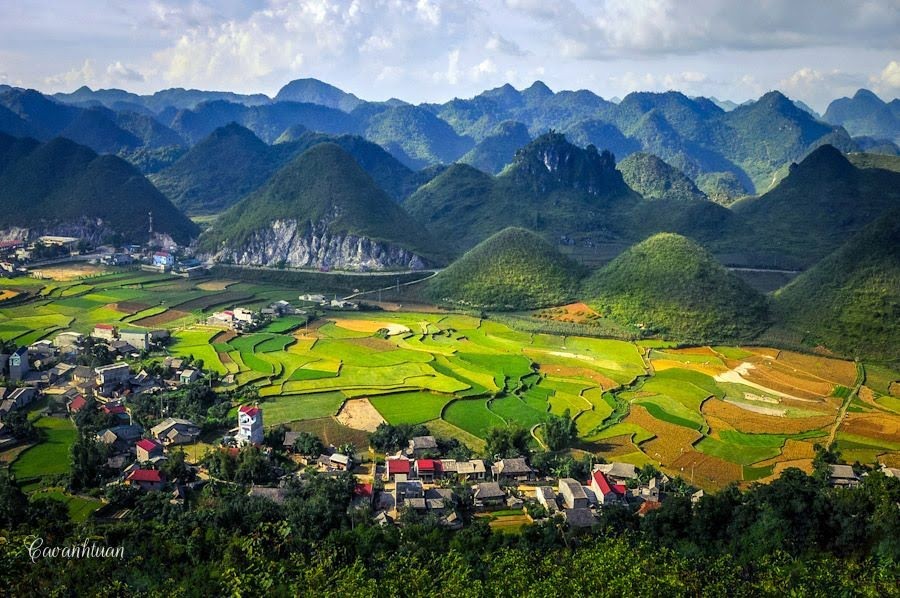
The village sits about 50 kilometers north of Ha Giang City and only a few minutes from Quan Ba Heaven Gate and the Twin Mountains. Surrounded by layered ridgelines and small agricultural valleys, Nam Dam feels both accessible and quietly isolated.
For visitors interested in understanding highland life rather than simply photographing landscapes, Nam Dam Village Dao ethnic culture offers one of the most authentic cultural experiences in northern Vietnam.
The Red Dao People of Nam Dam Village
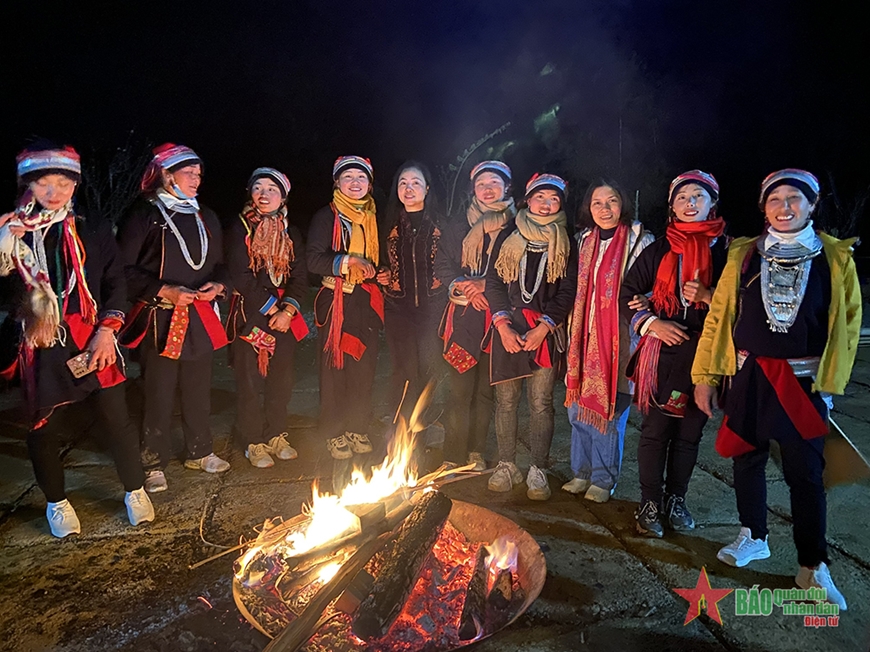
Nam Dam is primarily home to the Red Dao (Dao Do) ethnic group, one of the most recognizable communities in the northern mountains of Vietnam. Their identity is immediately visible through clothing, architecture, and daily customs that have been passed down through generations.
Women in the village often wear traditional garments decorated with intricate embroidery and red headscarves that symbolize the Red Dao heritage. These clothes are not mass-produced souvenirs but carefully handmade textiles. Embroidery skills are typically learned from childhood, and patterns can take weeks or months to complete.
The Red Dao language is still widely spoken in the village alongside Vietnamese. Cultural rituals tied to family events, harvest seasons, and spiritual beliefs continue to play an important role in village life.
Walking through Nam Dam, you quickly notice that this is not a place where culture has been staged for visitors. It remains a functioning community where traditions are part of everyday routines.
Traditional Architecture and Earthen Houses
One of the most distinctive features of Nam Dam Village Dao ethnic culture is its architecture.
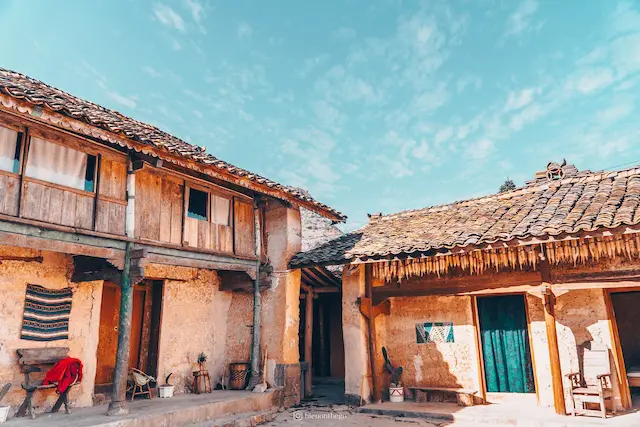
Many houses in the village are built using a traditional technique called “trinh tuong,” which involves compacting layers of earth into thick walls. These earthen walls can be up to half a meter thick and serve several practical purposes:
- They keep houses warm during the cold winter months.
- They maintain cooler temperatures during the hot summer.
- They provide natural insulation against strong mountain winds.
Roofs are typically constructed using clay tiles or wooden materials sourced from nearby forests. Inside, homes are arranged around a central living space where families cook, gather, and receive guests.
Courtyards in front of the houses are used for drying crops such as corn and rice, preparing herbal medicines, or simply sitting and talking with neighbors.
From a distance, the earthy tones of the houses blend almost seamlessly into the surrounding mountains, creating a village that feels organically connected to the landscape.
Herbal Medicine and the Famous Dao Herbal Bath
One of the most well-known traditions associated with Nam Dam village Dao ethnic culture is the Dao herbal bath.
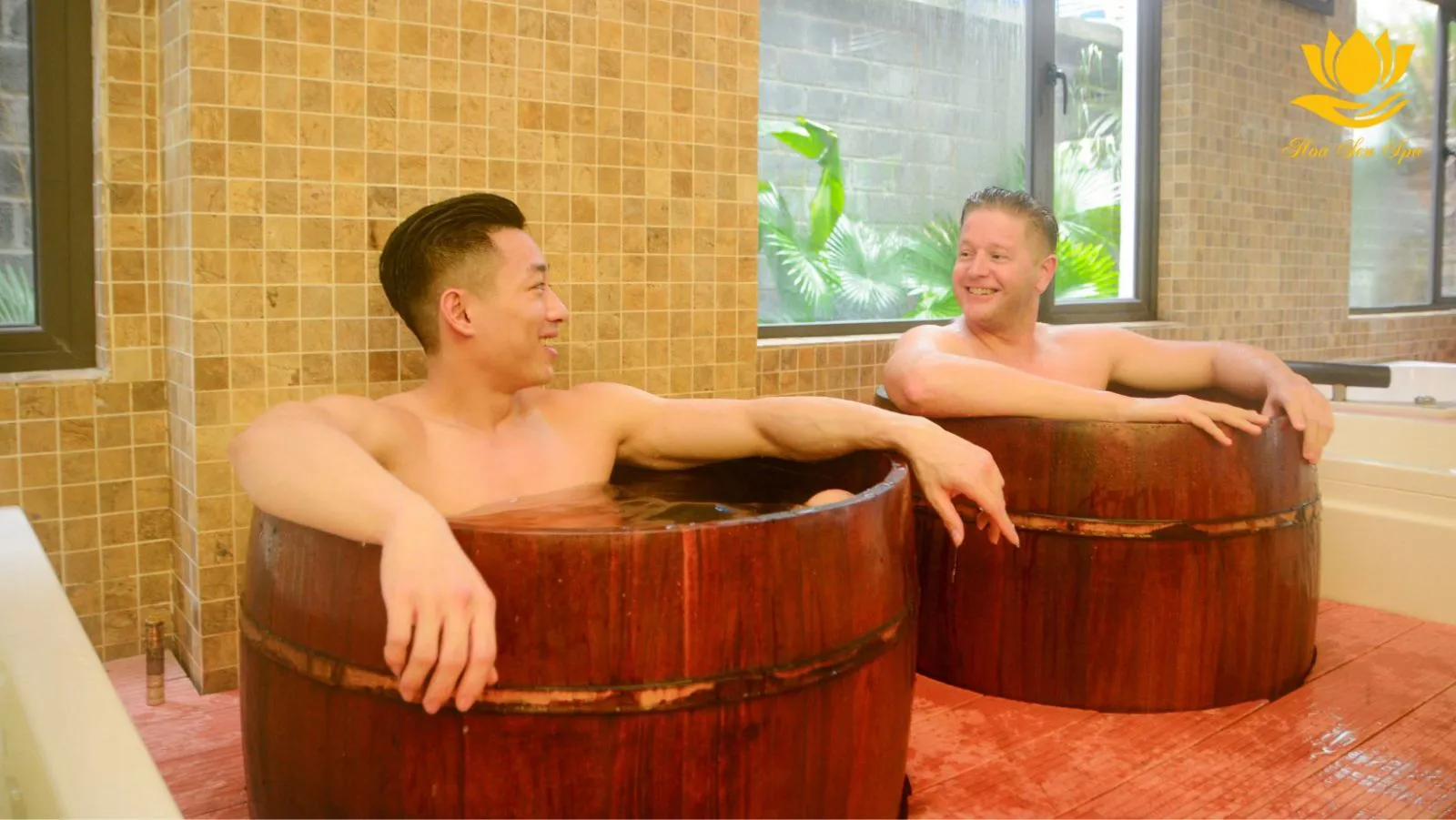
The Red Dao people have a long history of herbal medicine, developed through generations of living close to the forest environment. Local families collect dozens of medicinal plants from nearby mountains and forests. These herbs are boiled together to create a fragrant bath mixture believed to improve circulation, relax muscles, and support overall health.
The preparation process itself reflects the depth of knowledge within the community. Different herbs are chosen depending on the season and the desired health benefits.
Visitors who stay in the village often have the opportunity to experience this herbal bath in a wooden tub heated by firewood. After a long day exploring Ha Giang’s mountain roads, soaking in a Dao herbal bath can be both physically relaxing and culturally meaningful.
For the Red Dao community, however, these baths are not a tourist attraction. They are a traditional wellness practice that has existed long before tourism arrived in the region.
Daily Life in Nam Dam Village
Life in Nam Dam moves at the rhythm of agriculture and mountain weather.
Most families rely on small-scale farming and livestock. Corn, rice, vegetables, and herbs are grown on terraced slopes surrounding the village. Buffalo and pigs are commonly raised for both work and food.
Early mornings often begin with mist covering the surrounding mountains. Farmers walk out to the fields, while women prepare meals and tend to household activities.
Visitors who spend time walking through the village may observe:
- Women weaving or embroidering textiles
- Families drying corn in front of their homes
- Children playing along narrow paths
- Villagers gathering plants or herbs from nearby hills
These everyday scenes provide insight into how the Dao ethnic culture in Nam Dam Village continues to thrive through routine and community cooperation.
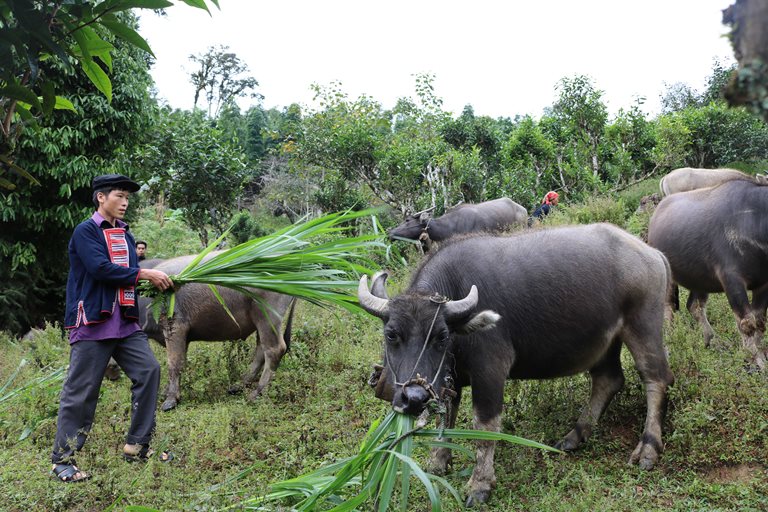
Community-Based Tourism in Nam Dam
Nam Dam has developed tourism carefully through a community-based tourism model.
Rather than building large hotels, local families operate small homestays inside traditional houses. This approach allows visitors to experience village life more directly while ensuring tourism income stays within the community.
Homestays typically provide:
- Simple but comfortable rooms
- Home-cooked local meals
- Herbal bath experiences
- Opportunities to learn about local customs
The village also maintains clean pathways and organized layouts to make walking around easier for visitors.
Compared to some other destinations along the Ha Giang Loop, Nam Dam feels calm and structured rather than chaotic.
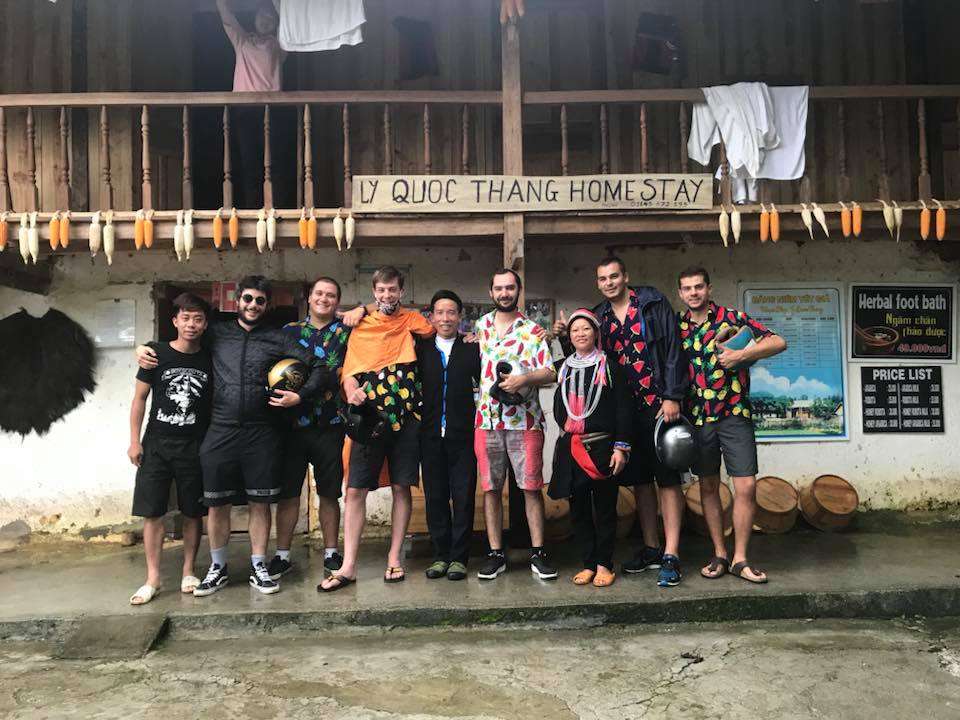
Local Food and Traditional Dao Cuisine
Food is another essential part of Nam Dam village Dao ethnic culture.
Meals served in homestays often include locally grown ingredients and traditional highland recipes. Some common dishes visitors may encounter include:
- Black chicken hotpot, known for its rich flavor and medicinal value
- Thang co, a traditional northern mountain stew
- Fresh vegetables grown in nearby gardens
- Smoked or dried meats preserved for mountain life
- Corn wine produced by local families
Meals are usually served family-style, where everyone shares dishes placed at the center of the table.
Eating together is an important cultural moment in Dao households. Conversations are slow, and meals often extend into long evenings of storytelling.
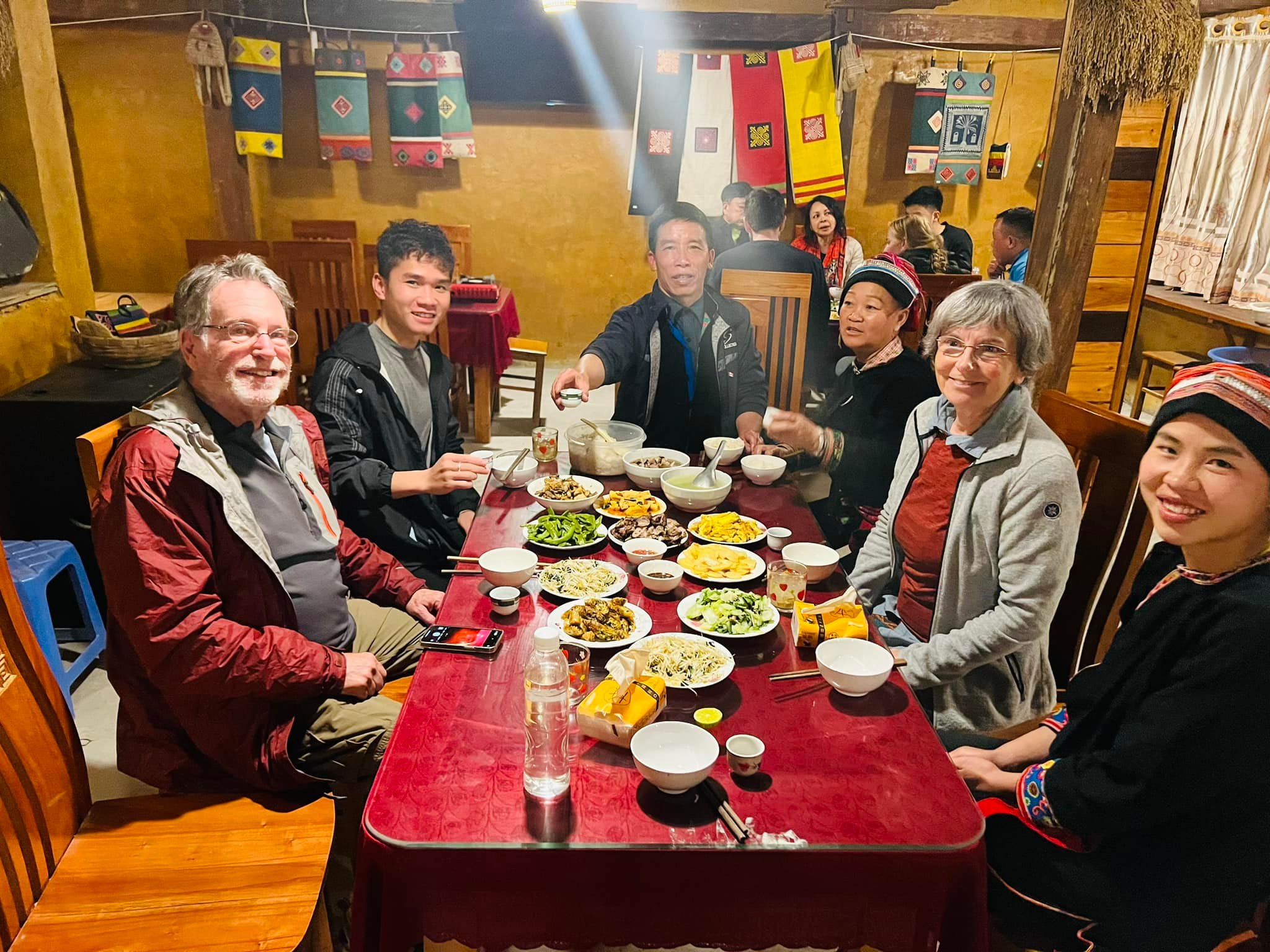
Best Time to Visit Nam Dam Village
The best time to experience Nam Dam village Dao ethnic culture depends partly on the type of scenery you want to see.
From September to November, the surrounding mountains and agricultural fields become particularly beautiful as crops mature and skies are often clear.
From March to May, temperatures are comfortable and vegetation across the region becomes greener after the winter months.
Winter months between December and February can be quite cold due to the village’s elevation, but misty mornings during this period create a dramatic mountain atmosphere.
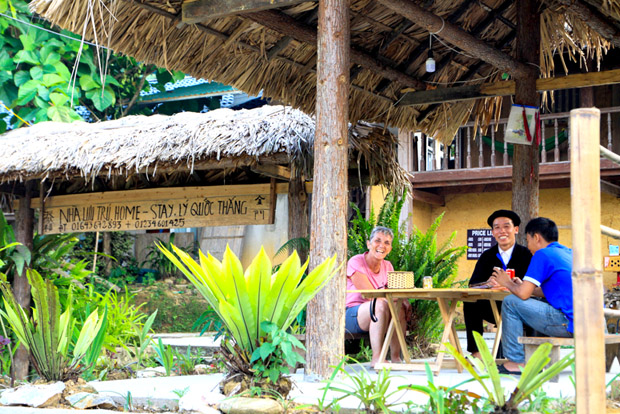
Exploring the Area Around Nam Dam
Nam Dam Village also serves as a convenient base for exploring nearby landscapes.
Within a short distance, travelers can visit Quan Ba Heaven Gate, one of the most famous viewpoints in Ha Giang. From here, the Twin Mountains rise from the valley floor, creating a striking natural formation.
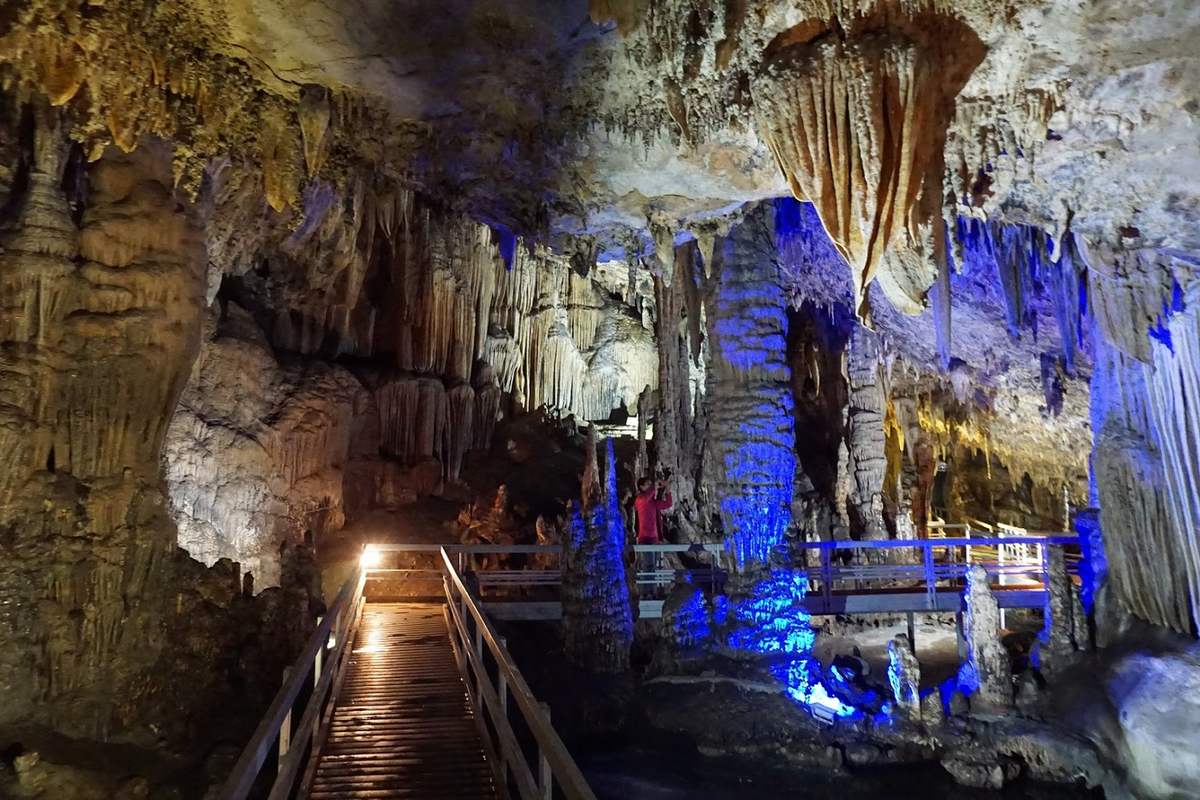
Another nearby attraction is Lung Khuy Cave, one of the most impressive limestone caves in the region. The cave features a network of stalactites and stalagmites formed over thousands of years.
Because Nam Dam sits near the beginning of the Ha Giang Loop route, staying here allows travelers to explore these locations early in the day before larger tour groups arrive.
Responsible Travel in Nam Dam Village
Because Nam Dam is still a living community, visitors should approach the village respectfully.
Some simple guidelines help ensure tourism remains positive for both travelers and residents:
- Dress modestly when walking through the village
- Ask permission before photographing people
- Avoid loud behavior late at night
- Respect family spaces inside traditional houses
These small actions help protect the cultural integrity of the community while allowing visitors to enjoy a meaningful experience.
Why Nam Dam Village Dao Ethnic Culture Matters
What makes Nam Dam village Dao ethnic culture so special is not a single attraction or event.
It is the quiet continuity of traditions: earthen houses built from the land itself, clothing embroidered by hand, herbal knowledge gathered from forests, and daily life shaped by cooperation between families and neighbors.
While many destinations change rapidly with tourism, Nam Dam still feels grounded in its original identity.
For travelers who want to see more than landscapes, the village offers a rare opportunity to witness a culture that continues to live and evolve within the mountains of Ha Giang.