

Understanding mobile signal on the Cao Bang Loop is important before you travel through one of northern Vietnam’s most remote and beautiful mountain regions. Cao Bang is famous for Ban Gioc Waterfall, Nguom Ngao Cave, Angel Eye Mountain, Ma Phuc Pass, Phong Nam Valley, ethnic villages, craft villages, and peaceful countryside roads. It is a stunning place to explore, but because many areas are rural and mountainous, phone signal can be inconsistent.
In Cao Bang City and larger towns, mobile signal is usually good enough for messaging, maps, calls, and basic internet use. However, once you move deeper into valleys, mountain passes, border areas, village roads, and remote countryside, signal can become weak or disappear completely. One Cao Bang Loop travel guide describes phone signal as good in towns but spotty on the roads, which is exactly what most travelers should expect.

For this reason, travelers should prepare before starting the loop. Download offline maps, save important addresses, carry a power bank, and do not rely entirely on mobile data for navigation. If you book with The Loop Tours, local guides and drivers can help reduce the stress of route planning, especially in areas where signal is weak.
Perfect Tours for You:
Is There Mobile Signal on the Cao Bang Loop?
Yes, there is mobile signal on the Cao Bang Loop, but it is not equally strong everywhere. In Cao Bang City, Trung Khanh, and other larger towns, you can usually expect usable mobile data. Around famous tourist areas such as Ban Gioc Waterfall or Nguom Ngao Cave, signal may also be available, but strength can vary depending on the network, weather, terrain, and exact location.
The main challenge is the road between destinations. Mountain roads, limestone valleys, forested areas, and remote villages can create dead zones. You may have full signal one moment, then lose data after turning into a valley or passing behind a mountain ridge.
Cao Bang has invested in digital infrastructure for tourism, and local reporting has noted efforts to provide 4G, 5G, and free Wi-Fi coverage at tourist sites. However, this does not mean every road, village, or homestay on the loop will have reliable service.
Best SIM Card for Cao Bang
For northern Vietnam’s mountain regions, Viettel is usually the safest choice. Several Vietnam travel SIM guides recommend Viettel for remote destinations such as Ha Giang and Cao Bang because of its stronger rural coverage. One eSIM guide specifically recommends Viettel for Ha Giang and Cao Bang, while noting that Vinaphone may be more suitable for easier destinations such as Sapa and Ninh Binh.
Vinaphone and Mobifone can still work in towns and some tourist areas, but they may be less reliable in remote mountain sections. If staying connected is important, choose a Viettel SIM or a Viettel-based eSIM before traveling.
You can buy a SIM card in Hanoi, at major airports, or in larger cities before heading to Cao Bang. Buying in advance is easier than trying to solve connection problems once you are already on the loop.

Should You Use eSIM or Physical SIM?
Both eSIM and physical SIM can work well in Vietnam, but the network behind the SIM matters more than the format. A Viettel-based eSIM is convenient if your phone supports eSIM and you want to set it up before arrival. A physical Viettel SIM is also a strong choice and may be easier to top up locally.
Before buying an eSIM, check carefully whether it uses Viettel, Vinaphone, Mobifone, or another network. Some cheap travel eSIMs may not use the best rural network. For the Cao Bang Loop, network quality is more important than saving a small amount of money.
If you are traveling as a couple or group, it can be smart to use different networks across different phones. For example, one person can use Viettel while another uses Vinaphone. This increases the chance that at least one phone has signal in mixed coverage areas.
Where Signal Is Usually Stronger
Mobile signal is usually stronger in:
- Cao Bang City
- Trung Khanh town
- Larger villages and town centers
- Main roads near populated areas
- Tourist sites with infrastructure
- Hotels and guesthouses in town
Cao Bang City is the best place to handle internet-heavy tasks before starting the loop. Download maps, confirm bookings, message your accommodation, check the weather, and save emergency contacts before leaving the city.
Trung Khanh is also a useful service point because it is closer to Ban Gioc Waterfall and Nguom Ngao Cave. If you need to reconnect, check messages, or update your route, larger towns are usually more reliable than small mountain roads.
Where Signal Can Be Weak or Unavailable
Mobile signal can be weak around:
- Remote mountain passes
- Deep valleys
- Border areas
- Small ethnic villages
- Forest roads
- Countryside routes around Phong Nam
- Areas near Angel Eye Mountain
- Roads between Ban Gioc and rural homestays
Even if there is signal, data may be slow. You may be able to send a message but not load maps, upload photos, or make video calls. Do not assume that you can stream, work online, or upload large files during the loop.
If you need to work remotely, finish important tasks before leaving Cao Bang City or choose accommodation with confirmed Wi-Fi.
Do Homestays Have Wi-Fi?
Many homestays and guesthouses in Cao Bang offer Wi-Fi, but quality varies. In Cao Bang City and larger towns, Wi-Fi is usually more reliable. In villages or countryside stays, Wi-Fi may be slow, unstable, or only available in common areas.
Power cuts or weak routers can also affect connection quality. If internet access is essential, ask your accommodation in advance. If you are booking through The Loop Tours, ask which overnight stays have Wi-Fi and whether mobile signal is usually available there.
For most travelers, Cao Bang is best enjoyed as a semi-offline destination. Expect enough connection for basic messaging in towns, but not constant high-speed internet everywhere.

Why Offline Maps Are Essential
Offline maps are one of the most important tools for the Cao Bang Loop. Even if your mobile signal is usually good, you should not rely on live navigation. Download Google Maps offline, Maps.me, or another offline map app before starting the loop.
Several northern Vietnam travel safety guides recommend offline maps for mountain routes because signal can be unreliable in remote areas.
Before leaving Cao Bang City, save:
- Your accommodation locations
- Ban Gioc Waterfall
- Nguom Ngao Cave
- Angel Eye Mountain
- Ma Phuc Pass
- Phong Nam Valley
- Fuel stops
- Restaurants or lunch stops
- Emergency contacts
- Return route to Cao Bang City
Offline maps can help you keep moving safely even when mobile data disappears.
Safety Tips for Staying Connected
Charge your phone fully every morning. Bring a power bank, especially if you use your phone for navigation, photos, translation, and messaging. Cold or wet weather can drain battery faster than expected.
Tell someone your route before leaving for the day. If you are self-riding, share your itinerary with your accommodation or a friend. If signal disappears, people should still know roughly where you planned to go.
Avoid riding after dark. Weak signal combined with rural roads, poor lighting, and unfamiliar terrain can create unnecessary risk.
Carry cash as well. If mobile banking or QR payment does not work because of weak signal, you will still need Vietnamese dong for meals, fuel, parking, and homestays.
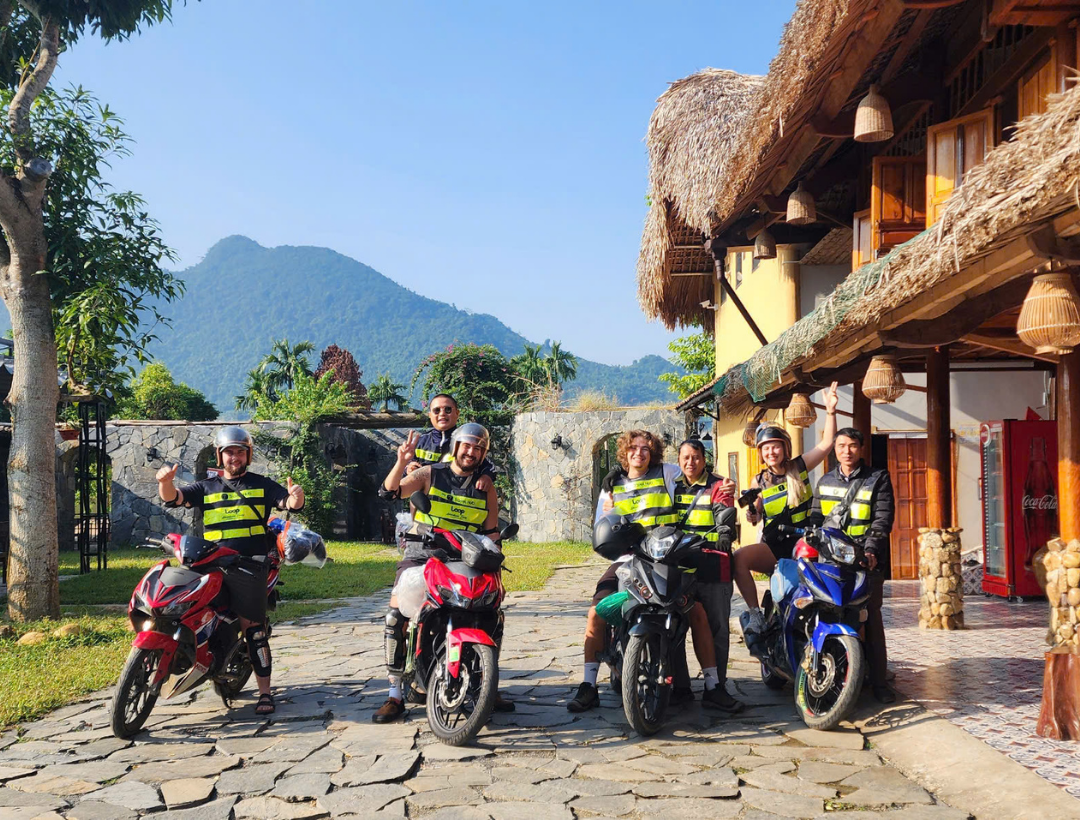
Mobile Signal for Self-Riders
Self-riders should be extra prepared. Do not depend entirely on Google Maps live navigation. Download the route in advance and check your next stop before leaving each town.
If the signal drops, do not panic. Continue only if the road is clear and you know the general direction. If unsure, stop safely and ask locals. Simple Vietnamese phrases, screenshots, or saved map pins can help.
Self-riders should also avoid last-minute route changes in remote areas. A road that looks short on the map may be steep, rough, or poorly marked.
Mobile Signal for Easy Rider, Jeep, or Car Travelers
If you travel with an Easy Rider, jeep, private car, or guided tour, mobile signal is less stressful. Your driver or guide knows the road and does not need constant online navigation. This is one of the main advantages of traveling with local support.
The Loop Tours can help plan your route, transport, homestays, and scenic stops so you do not have to worry as much about losing signal between destinations. This is especially useful for beginners, non-riders, families, and travelers who prefer a smoother trip.
Can You Upload Photos During the Loop?
You may be able to upload photos in towns or at accommodations with decent Wi-Fi, but do not expect fast upload speeds everywhere. Cao Bang is highly photogenic, so you may take many photos and videos. Large uploads can be slow on mobile data.
The best approach is to back up photos when you have Wi-Fi and save major uploads for Cao Bang City, Hanoi, or another city with stronger internet. Bring enough phone storage or memory cards so you do not depend on cloud backup during the loop.
Final Thoughts
So, what should you expect from mobile signal on the Cao Bang Loop? In towns, signal is usually good enough for basic use. On remote roads, mountain passes, valleys, and village routes, signal can be weak or disappear. Viettel is generally the best choice for rural northern Vietnam, but no network is perfect everywhere.
Before starting the loop, buy a reliable SIM or eSIM, download offline maps, save important locations, carry a power bank, and bring cash. If you want a smoother journey with less stress, book your Cao Bang Loop with The Loop Tours for local guidance, planned routes, homestays, and support through one of Vietnam’s most beautiful mountain regions.