

If you are planning a northern Vietnam adventure, the topic Border Permit Ha Giang - Cao Bang is something you should understand before starting your trip. Ha Giang and Cao Bang are two of the most spectacular provinces in Vietnam, famous for mountain passes, ethnic villages, waterfalls, caves, limestone landscapes, and remote border roads. However, because both provinces are located near the Vietnam-China border, foreign travelers may need special permission for certain routes or restricted border areas.
Many visitors focus on motorbike rental, homestays, weather, viewpoints, and tour prices, but forget about border-area regulations. This can create problems during the trip, especially if you enter sensitive border zones, stay overnight in certain districts, or travel through remote village roads without the right documents.
This guide explains the difference between the Ha Giang border permit and the Cao Bang border-area permit, who may need them, how much they cost, what documents to prepare, and why booking with The Loop Tours can make the process easier and safer.
Recommended Tours for You:
Why Border Permits Matter in Northern Vietnam
Ha Giang and Cao Bang are not ordinary travel destinations. They are mountainous border provinces with many areas close to China. Some famous travel routes pass through districts, communes, or roads that are monitored more carefully because of their location.
A border permit is not meant to make travel difficult. It helps local authorities manage foreign visitor movement in sensitive areas and ensure accommodation registration, safety, and route control. For travelers, having the right permit can prevent delays at checkpoints, problems at homestays, or unexpected changes to the itinerary.
If you are only visiting a city center or a normal tourist area, you may not always need a special permit. But if your route includes remote border districts, overnight stays near border communes, border markers, drone filming, or off-the-main-road exploration, you should check the requirements before departure.
Ha Giang Border Permit: Do You Need One?
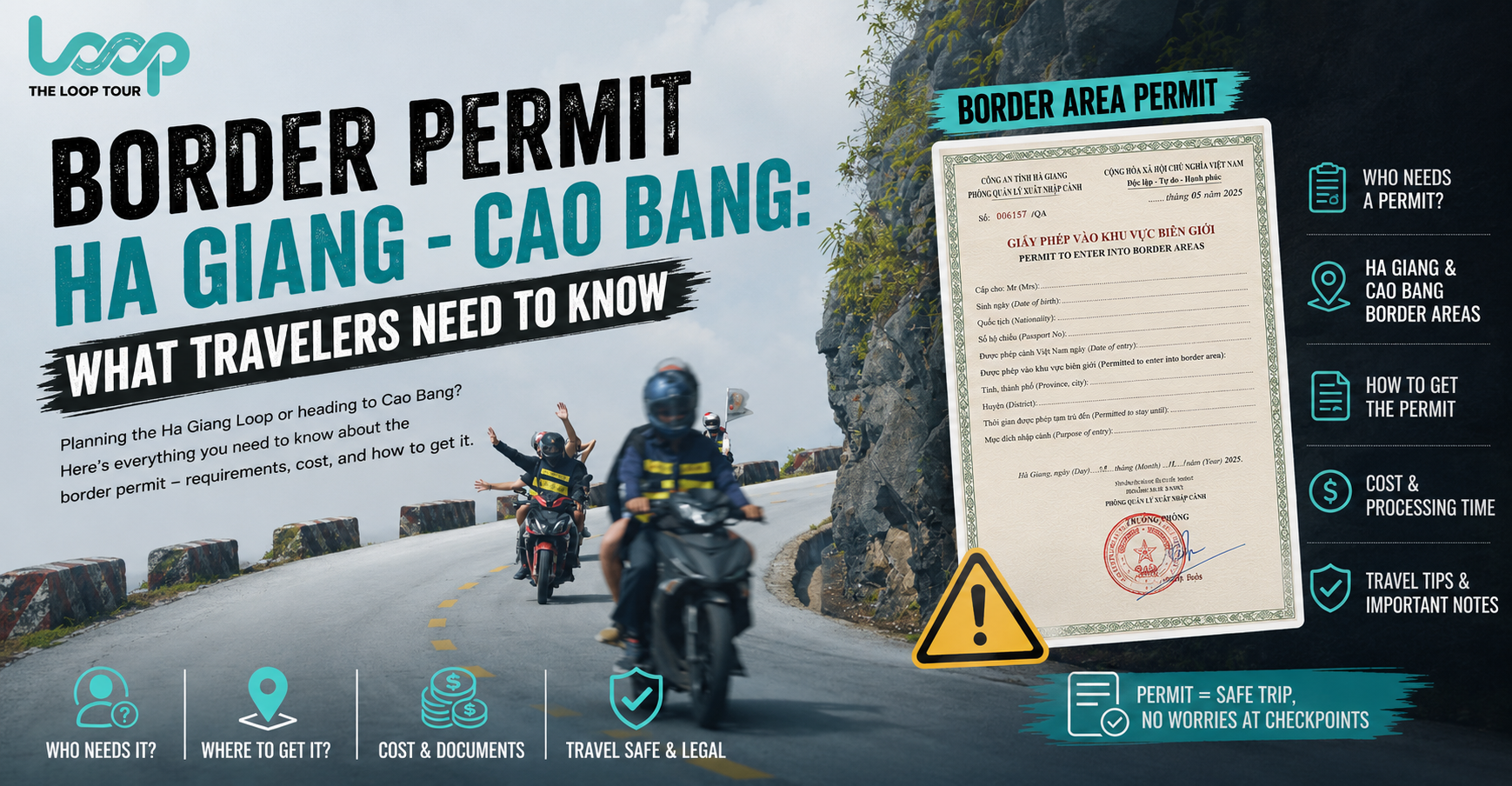
For most foreign travelers doing the classic Ha Giang Loop, the answer is yes. The standard Ha Giang Loop often passes through important border districts such as Quan Ba, Yen Minh, Dong Van, and Meo Vac. These are the areas where many travelers visit Heaven Gate, Dong Van Old Quarter, Ma Pi Leng Pass, Nho Que River, and remote ethnic villages.
Because these districts are close to the Vietnam-China border, foreign travelers are generally expected to have a Ha Giang border permit, sometimes called a restricted area permit or Ha Giang Loop permit. You may need to show it at police checkpoints, hotels, guesthouses, or homestays.
Even if some travelers say they were not checked, it is not wise to rely on luck. Rules and enforcement can change, and local accommodation providers may still ask for the permit when registering foreign guests. Having the permit before starting the loop is the safest and simplest option.
Ha Giang Border Permit Cost
The Ha Giang border permit is usually affordable. In many cases, the fee is around $10 per person, equivalent to approximately 260,000 VND. The final cost may vary slightly depending on whether you apply directly at the immigration office or arrange it through a hostel, motorbike rental company, or tour operator.
If you apply by yourself, the fee may be a little lower, but you need to visit the correct office, prepare your documents, and complete the form during working hours. If you arrange the permit through a tour provider, the price may include a small service fee, but the process is usually faster and easier.
For many travelers, paying a small extra fee for support is worth it because it saves time, avoids confusion, and helps make sure the permit is ready before the trip.
Cao Bang Border Area Permit: Is It the Same?
The Cao Bang border-area situation is different from Ha Giang. Travelers should not assume that the same Ha Giang permit automatically applies to Cao Bang. Cao Bang has its own routes, border communes, local management rules, and sensitive areas.
For many normal sightseeing routes, such as visiting Cao Bang City, Ban Gioc Waterfall, Nguom Ngao Cave, Khuoi Ky Stone Village, Pac Bo, or Phia Oac with a standard tourist itinerary, travelers may only need to carry their passport, valid Vietnam visa or visa exemption proof, accommodation details, and travel plan. However, if the itinerary enters restricted border areas, remote roads near the Vietnam-China border, border-marker zones, or areas with photography and filming limits, formal permission may be required.
This is especially important if you plan to travel independently, explore remote village roads, fly a drone, film professionally, visit border markers, or stay overnight in smaller communities near the border. In these cases, you should check with a licensed local operator, hotel, homestay, or relevant authority before departure.

Cao Bang Permit Cost and Processing Time
If a formal Cao Bang border-area permit is required for your specific route, the official fee is commonly around $10 per person. The processing time may be longer than Ha Giang, so travelers should not leave this until the last minute. In some cases, the process can take several working days after a complete application is received.
This is why route checking is very important. Some travelers may not need a formal Cao Bang permit for a standard trip, while others may need one because of their route, overnight location, filming activity, drone plan, or access to sensitive border areas.
Before traveling, send your planned route, dates, accommodation names, nationality, passport details, and planned activities to your tour operator or local contact. They can help confirm whether a permit is required and which documents should be prepared.
Documents You Should Prepare
For both Ha Giang and Cao Bang, foreign travelers should always carry the original passport, not only a photo on the phone. You should also prepare a valid Vietnam visa, e-visa, visa exemption stamp, or residence document if applicable.
A clear itinerary is also important. This should include your travel dates, overnight stops, major sightseeing locations, and route direction. If you are riding a motorbike, prepare the vehicle plate number, rental contract, and rental shop contact. If you are self-riding, you should also have a valid driving license, a 1968 International Driving Permit if applicable, and travel insurance that covers motorbike travel.
For Cao Bang, if you plan drone use, professional filming, media work, research, NGO work, or border-marker visits, you may need extra approval. Do not assume that a normal tourist visa allows all activities in border areas.
What Happens If You Do Not Have the Right Permit?
If you do not have the correct permission, your trip may be delayed. Local authorities may ask you to return, change your route, avoid a certain area, or complete extra paperwork before continuing. In some cases, administrative penalties may apply.
Accommodation can also become a problem. Hotels and homestays in border districts may need to register foreign guests with local authorities. If your documents are incomplete, they may not be able to check you in.
This is especially stressful at night or in remote areas where accommodation options are limited. Preparing the right documents before the trip is much easier than solving problems on the road.
Ha Giang - Cao Bang Combined Route: What to Check
Many travelers now combine Ha Giang and Cao Bang in one longer loop. This is an incredible journey, but it requires better planning than a simple 3-day route. A combined itinerary may include Ha Giang City, Quan Ba, Yen Minh, Dong Van, Meo Vac, Bao Lac, Nguyen Binh, Cao Bang City, Ban Gioc Waterfall, Nguom Ngao Cave, Khuoi Ky, and Pac Bo.
For this type of route, travelers should check permits separately for Ha Giang and Cao Bang. The Ha Giang permit is commonly needed for the main loop districts. For Cao Bang, the need depends more on the exact route and activities. A standard sightseeing route may be straightforward, while remote border roads or drone filming may require extra checks.
The safest approach is to plan with a local team that understands both provinces.
Why Book With The Loop Tours?
Understanding Border Permit Ha Giang - Cao Bang can feel confusing, especially for first-time travelers. Each province has different routes, different sensitive areas, and different local procedures. If you are also thinking about motorbike rental, Easy Rider options, homestays, road conditions, weather, and safety, the planning process can become overwhelming.
That is why booking with The Loop Tours is a smart choice. The Loop Tours can help you check your route, understand permit requirements, prepare the right documents, and organize a smoother journey through Ha Giang and Cao Bang.
Whether you want a Ha Giang Loop, a Cao Bang Loop, or a combined Ha Giang - Cao Bang adventure, the team can help with local guidance, trusted accommodation, transport, experienced drivers, scenic stops, and practical travel support. Instead of worrying about paperwork and border-area rules, you can focus on the mountains, villages, waterfalls, and unforgettable landscapes of northern Vietnam.
Final Thoughts
The topic Border Permit Ha Giang - Cao Bang is important for any foreign traveler planning to explore northern Vietnam’s border provinces. In Ha Giang, a border permit is generally needed for the classic loop through Quan Ba, Yen Minh, Dong Van, and Meo Vac. In Cao Bang, the requirement depends more on the exact route, border-area access, overnight stops, and special activities such as drone use or filming.
The best advice is simple: do not guess. Check your itinerary before departure, carry your passport and visa documents, and arrange any required permit early.
For a legal, safe, and stress-free trip, book your northern Vietnam adventure with The Loop Tours. Let local experts handle the details while you enjoy the best of Ha Giang and Cao Bang.
FAQs About Border Permit Ha Giang - Cao Bang
Do I need a border permit for Ha Giang?
Yes. Most foreign travelers doing the classic Ha Giang Loop should prepare a border permit, especially when visiting Quan Ba, Yen Minh, Dong Van, and Meo Vac.
How much is the Ha Giang border permit?
The Ha Giang border permit is commonly around $10 per person, approximately 260,000 VND, though the final cost can vary depending on how you arrange it.
Do I need a border permit for Cao Bang?
It depends on your route. Standard sightseeing routes may not always require a formal permit, but restricted border areas, remote border roads, drone use, filming, or certain overnight stays may require extra permission.
Is the Ha Giang permit valid for Cao Bang?
No. You should not assume that a Ha Giang permit automatically covers Cao Bang. The two provinces have different local arrangements and route conditions.
Can The Loop Tours help with permits?
Yes. The Loop Tours can help check your itinerary, explain document requirements, and support permit preparation for Ha Giang, Cao Bang, or a combined loop itinerary.