

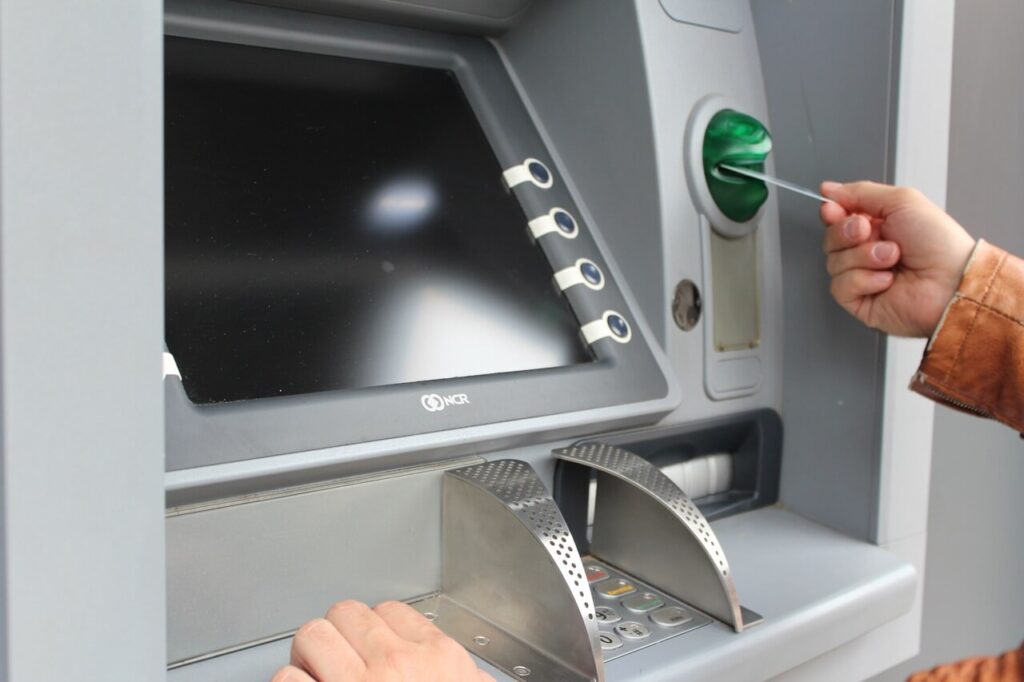
If you are planning the Ha Giang Loop, one of the most practical questions is also one of the easiest to forget until the last minute: are there ATMs on the Ha Giang Loop, and how much cash should you bring? The short answer is yes, but you should not rely on them completely. Along the route, ATMs are usually found in Ha Giang City, Dong Van, and Meo Vac, but they are not always reliable. That is why the safest approach is still to prepare your cash in advance rather than waiting until you urgently need to find the nearest ATM.
This matters because the Ha Giang Loop is a mountain journey, not a city trip with banks and modern payment options everywhere. Once you leave the city, many of your real expenses will happen at small cafés, local restaurants, village homestays, parking spots, local markets, or roadside stops. Some places may accept bank transfer, but cash is still the easiest and most dependable way to pay.

Perfect Tours for You:
Where can you usually find ATMs on the Ha Giang Loop?
If you are looking for the places where ATMs are most likely to be available, Ha Giang City, Dong Van, and Meo Vac are the three main points. These are also the biggest service stops along the classic loop. Even so, “having an ATM” does not mean that the machine will always work properly when you need it. It may run out of cash, lose connection, reject foreign cards, or simply stop working at the wrong time.
That is why the smartest option is still to withdraw most of the money you need in Ha Giang City before you start the trip. This is the easiest place to handle your money planning, and it is also the best moment to sort out your budget before entering the more remote mountain sections. The farther you go into smaller towns and villages, the more limited payment options become, and the more useful cash is.
Should you rely on ATMs in Dong Van and Meo Vac?
You can absolutely treat Dong Van and Meo Vac as backup cash points, but they should not be your main plan. These towns are helpful if you need extra cash in the middle of the trip, especially if your journey lasts several days and you spend more than expected. But if everything is going smoothly, it is still much better to prepare enough money in Ha Giang first, so you do not have to worry about finding a working ATM in the middle of the most scenic part of the route.
This becomes even more important if your spending style is a bit more relaxed. Just a few extra scenic coffee stops, a few small souvenirs, some extra drinks at homestays, or a few spontaneous experiences can make your cash run out faster than expected. In that case, being prepared from the beginning will make the whole journey much more enjoyable.
What do you actually need cash for?
Many travelers assume that if they have already paid the main costs before the trip, they do not need much cash anymore. In reality, the Ha Giang Loop still involves many small daily expenses. Cash is commonly used for coffee, extra drinks, snacks, parking, fruit from roadside stalls, souvenirs, or small activities you decide to join on the spot.
In addition, even though many of Ha Giang’s best-known viewpoints are free to visit, you should still keep some small cash for things like parking, costume rental for photos, or other minor add-ons. For example, a boat ride on the Nho Que River usually has a separate fee, the Lung Cu Flag Tower area may involve small entry and parking costs, and experiences like herbal baths in local villages are also usually paid in cash. Each expense may seem small on its own, but over a few days, they can add up.
How much cash should you bring?
The right amount of cash depends on your travel style. If you are traveling fully independently, you will need a wider budget to cover bike rental, fuel, food, accommodation, attraction fees, and extra costs. If you have already paid for most of the big parts of the journey in advance, your cash needs will be much lighter.
In normal conditions, bringing around 1,000,000 to 2,500,000 VND in cash is usually a comfortable amount for a Ha Giang Loop trip when most of the major costs have already been sorted. This amount is generally enough for coffee, extra drinks, snacks, a few small souvenirs, parking fees, small entry costs, and personal expenses over several days.
If you are a careful spender, 1,000,000 to 1,500,000 VND may be enough. If you want more flexibility, like stopping at more cafés, buying gifts, tipping, or saying yes to extra experiences, then 1,500,000 to 2,500,000 VND will feel more comfortable. If you want complete peace of mind and do not want to think too much about cash during the journey, bringing around 3,000,000 VND or more is also a reasonable choice.

Why should you carry small bills?
It is not only the total amount of money that matters. The denominations you carry are important too. In real travel situations, a wallet full of smaller notes is often much more useful than a few large ones. At small cafés, village shops, parking areas, or roadside stands, getting change is not always easy. Having 10,000, 20,000, 50,000, and 100,000 VND notes will make payments quicker, easier, and more comfortable.
Small bills also help you control your budget better. When you use smaller notes for coffee, drinks, or snacks, it is easier to keep track of what you are spending, instead of constantly breaking large notes and losing track of where the money went.
The easiest way to reduce ATM and cash stress
The best way to worry less about ATMs is not to search for as many ATMs as possible along the route. It is to reduce the number of things you still need to pay for while you are already on the road. When major logistics such as accommodation, main meals, transport, and the bigger costs are arranged in advance, the amount of cash you need becomes smaller, more predictable, and much easier to manage.
You should also withdraw your money in Ha Giang City before departure, split your cash into different places rather than keeping everything in one wallet, and always keep a small emergency reserve for unexpected situations. This is the simplest way to make a mountain trip feel lighter and easier.
Final thoughts
So, are there ATMs on the Ha Giang Loop? Yes, usually in Ha Giang City, Dong Van, and Meo Vac. But the smarter approach is this: withdraw most of the cash you need in Ha Giang City, carry small bills, and treat Dong Van or Meo Vac as backup options rather than your main plan.
Ha Giang is a place where your attention should be on the scenery, the road, and the experience, not on worrying whether the next ATM will work. When you prepare your cash properly from the start, everything on the road becomes much simpler. And that is one of those small but valuable steps that can make your Ha Giang Loop trip feel far more complete.
👉 Call/WhatsApp The Loop Tours — Hotline: +84862443320