

If you are planning the Loop, one of the most useful questions to ask before you leave is simple: what is the mobile signal on the Ha Giang Loop actually like? The honest answer is that it is good enough in the main towns, but inconsistent once you get deeper into the mountains. The route itself is a 350 to 400 km loop that usually starts and ends in Ha Giang City, passing through places like Quan Ba, Yen Minh, Dong Van, Meo Vac, and Du Gia, so your connection will naturally rise and fall depending on where you are on that route.
That inconsistency is not unusual. The Loop runs through high passes, deep valleys, and remote ethnic minority villages, which are exactly the kind of landscapes that make mobile coverage less predictable. One travel guide on the route notes that some parts are very remote, with limited access to mobile networks, and recommends carrying a reliable map and keeping your phone fully charged before you head out.

Perfect Tours for You:
Is there mobile signal on the Ha Giang Loop?
Yes, there is mobile signal on the Ha Giang Loop, but you should not expect stable coverage all day long. In practical terms, most travelers can usually get back online in the larger stops, then lose signal again in the mountain sections between them. A recent route guide describes coverage as available in the main towns, but inconsistent on passes and between villages, which is a good way to think about it overall.
This means the question is not really whether signal exists at all. It is whether you are comfortable with the idea that it may disappear for stretches of the ride. If you are only using your phone for messages, maps, and the occasional photo upload, that is usually manageable. If you are expecting constant navigation, live video calls, or uninterrupted data all day, the Loop can feel much less reliable.
Where is signal usually better?
In general, Ha Giang City is the most reliable place to sort out your connectivity before you start. It is the official gateway to the route, the place where travelers usually arrive the night before, and the easiest place to deal with final logistics before heading into the mountains.
After that, the larger stops on the loop tend to be the places where signal is most likely to return. Because the main route passes through Dong Van and Meo Vac after the eastern section of the plateau, these towns are usually the safest places to expect a better connection than you will get on the open road. A route guide summarizing the loop describes coverage as available in these main towns, while warning that the gaps happen between them.
Where should you expect weak signal or dead zones?
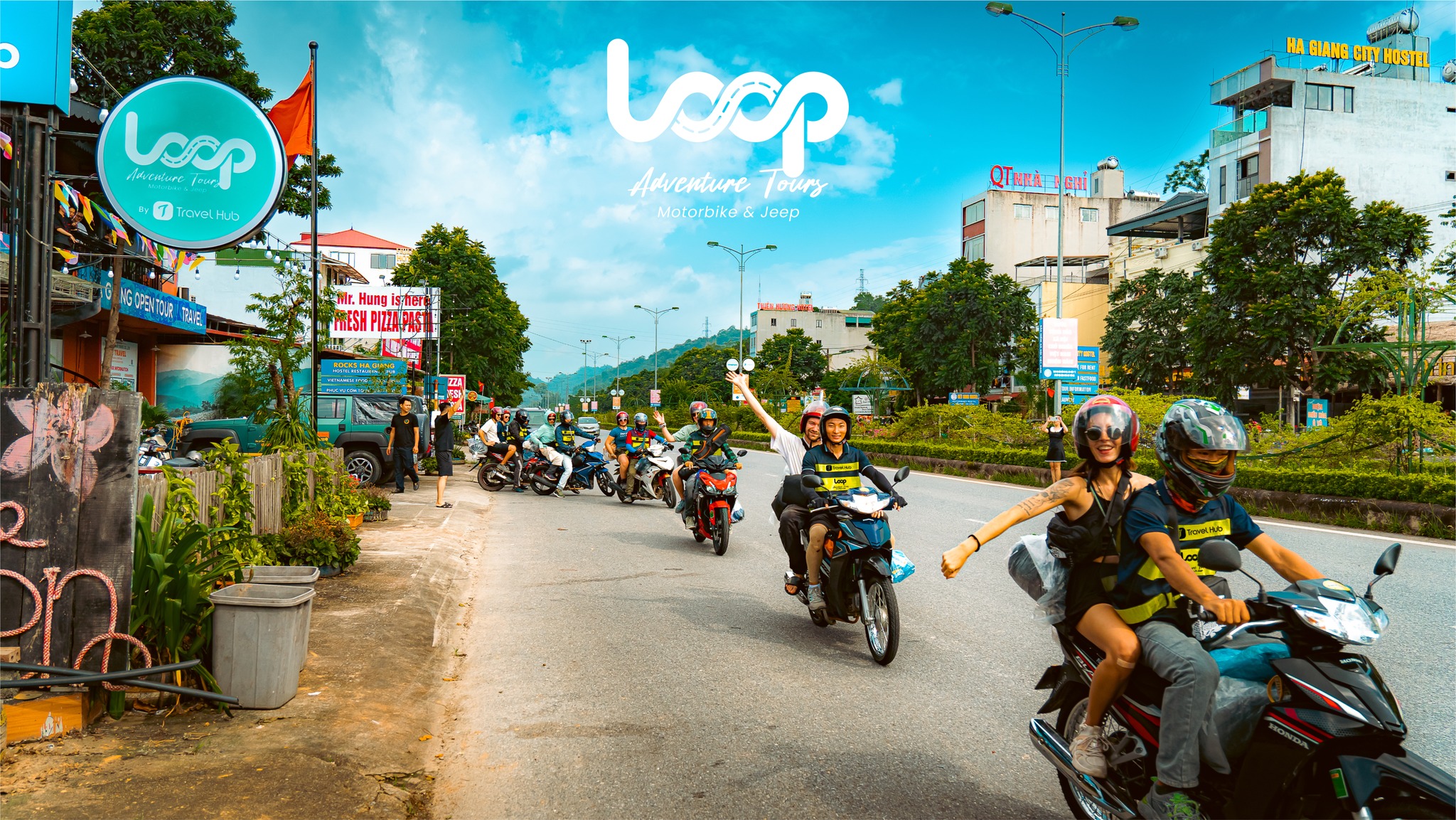
The weakest signal usually appears in exactly the places that make Ha Giang famous: mountain passes, cliff roads, valley sections, and remote village detours. If your route includes big scenic stretches between Quan Ba and Dong Van, the high pass sections around Ma Pi Leng, or quieter rural finishes such as Du Gia, you should be prepared for periods where your phone connection becomes slow, unstable, or disappears completely. The main beginner route and the live 3-day and 4-day itineraries all pass through these kinds of remote landscapes.
That is one reason mountain travel feels so different from city travel. Signal is not just weaker because the area is rural. It is also affected by geography. The same mountains and valleys that make the views spectacular can block or weaken reception, especially when you are riding between settled areas.
What should you download before you go?
The smartest approach is to assume that you will lose signal at some point, then prepare for that before the ride starts. One beginner guide recommends keeping an offline map on your phone, and the general packing list also highlights the importance of bringing a phone and backup charger for the route.
In practice, that means downloading your route in advance, saving your accommodation details offline, screenshotting important booking information, and keeping key contact numbers easy to access without needing data. Even when signal returns later, it is much less stressful to ride when you are not depending on the next bar of reception to know where you are going.
Do you need a power bank?
Yes, a power bank is one of the easiest ways to make the whole issue less stressful. The packing lists for the live tours specifically include a phone and backup charger, which makes sense because mobile signal is only part of the problem on a long mountain ride. Even when you do have coverage, constant map checking, photos, and cold weather can drain your battery faster than expected.
Battery anxiety also tends to feel worse in places with weak signal, because phones often work harder searching for connection. So even if you are not using your phone constantly, carrying backup power is one of the simplest pieces of preparation you can make.
Is signal a reason to choose a guided route?
For many travelers, yes. Weak signal is not usually a reason to cancel the trip, but it is a good reason to think carefully about how you want to do it. The beginner guide presents Easy Rider and Jeep/car as the safest, easiest formats for travelers who do not want unnecessary stress, while the live tour pages currently offer 3-day and 4-day Ha Giang routes with Self Rider, Easy Rider, and Jeep options.
That matters because staying connected is easier when you are not carrying the whole logistical burden yourself. If transport, route flow, and overnight stops are already structured, losing signal for a stretch becomes much less of a problem. You are not suddenly depending on your phone for every next step.

Is 3 days or 4 days better if connectivity worries you?
If signal uncertainty makes you uneasy, a 4-day route usually feels easier than a tighter 3-day one. The beginner guide describes 4 days / 3 nights as the best pace for beginners because it gives more time for breaks, photos, and a less rushed rhythm overall. That slower pace does not improve the signal itself, but it does make the trip feel less dependent on real-time navigation and last-minute fixes.
A shorter 3-day loop can still work well, especially if your schedule is tight. But if you prefer more breathing room, extra village time, and fewer moments where you feel pushed by the clock, a 4-day version tends to be the calmer choice.
Final thoughts
So, what is mobile signal on the Ha Giang Loop really like? The simplest answer is this: expect decent connection in Ha Giang City and the main towns, but expect weak or missing signal in the remote mountain sections between them. If you prepare for that in advance, it stops being a problem and becomes just another part of the adventure.
The best way to stay relaxed is to download offline maps, carry a fully charged phone and power bank, and choose a route style that does not leave you overly dependent on mobile data every hour of the day. When you approach the Loop like that, the signal question becomes much smaller, and the scenery becomes the part that matters.
👉 Call/WhatsApp The Loop Tours — Hotline: +84862443320