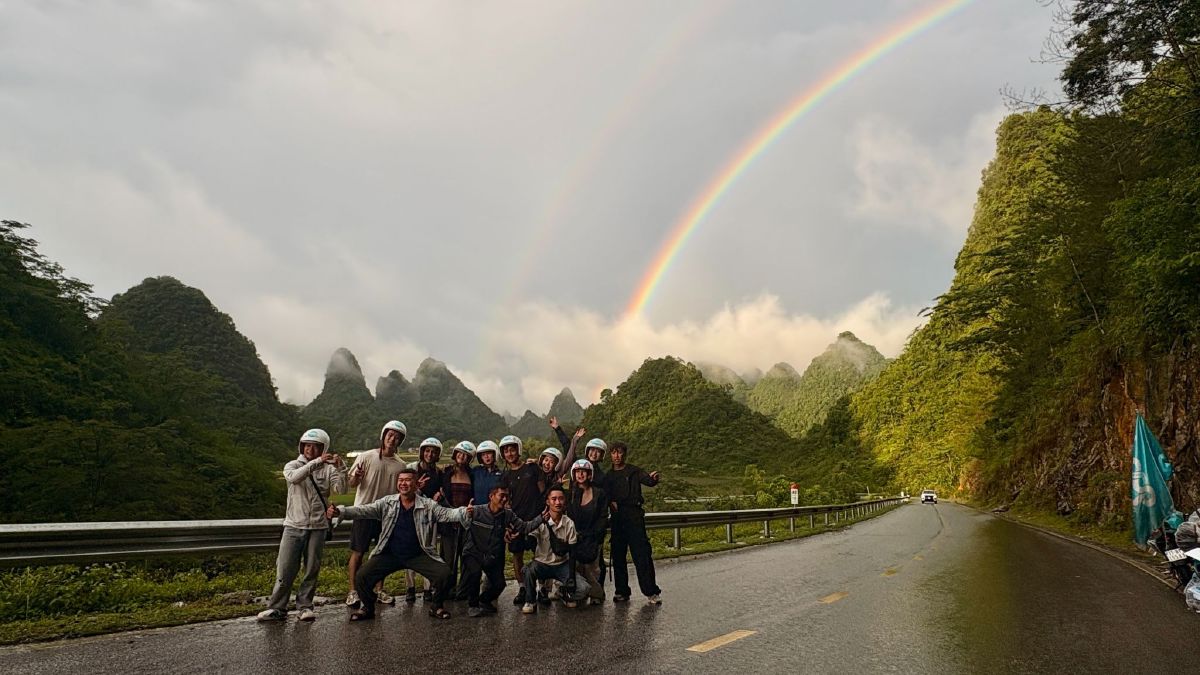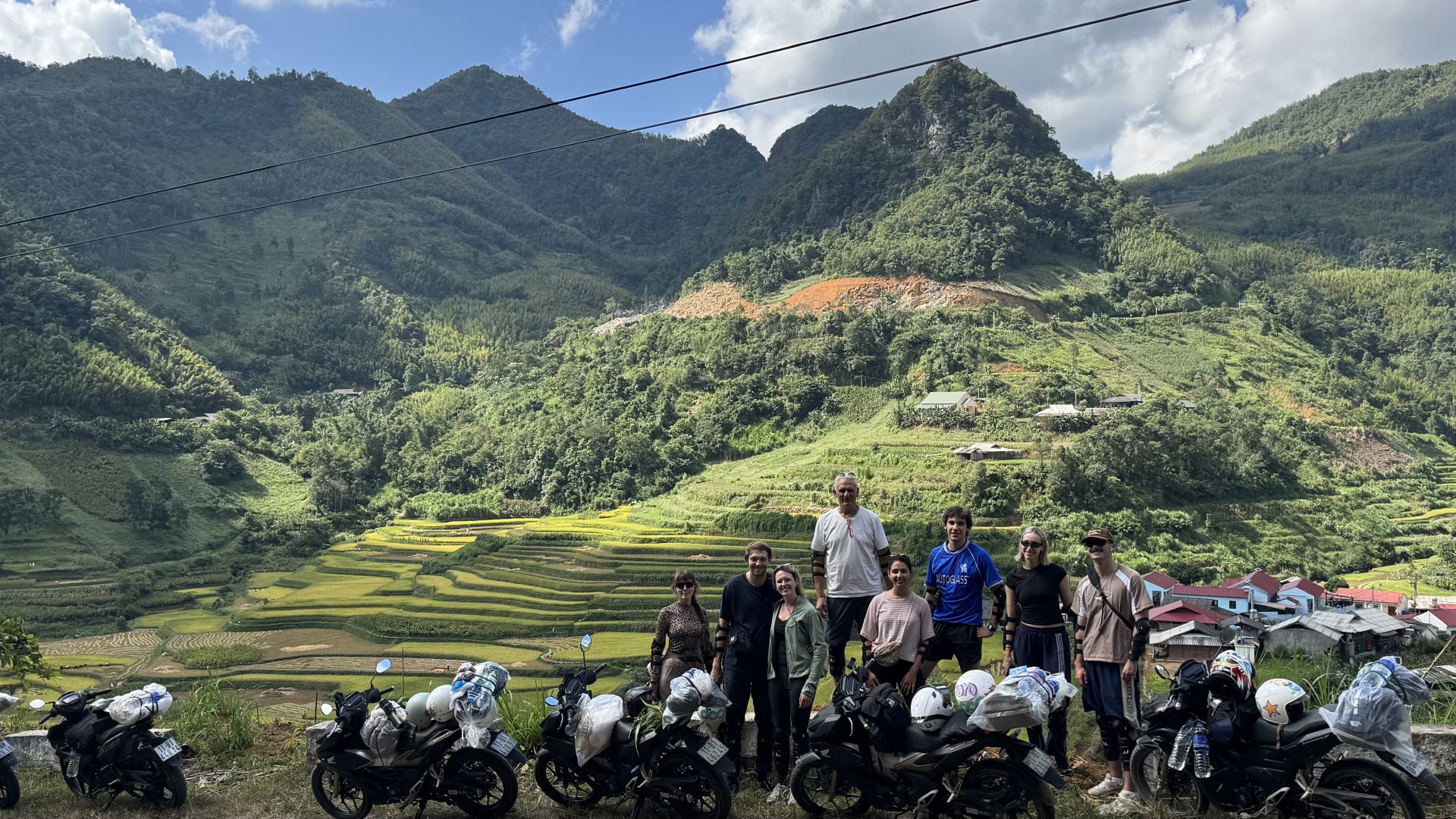


If you are planning the Loop and wondering about WiFi in Ha Giang homestays, the most honest answer is this: some stays have usable WiFi, but you should not expect city-level internet everywhere. Ha Giang accommodation ranges from hostels in Ha Giang City and Dong Van to local-family homestays in villages like Nam Dam, Du Gia, Pả Vi, and Hoang Su Phi. Because many of those stays sit in mountain areas and ethnic villages rather than towns, internet quality naturally varies a lot from place to place.
That does not mean staying connected is impossible. It just means that WiFi in Ha Giang should be treated as a helpful extra, not something to build your whole trip around. The far north is famous for remote villages, mountain passes, and off-the-beaten-path scenery, and that same remoteness is part of why mobile networks and internet can feel less predictable than in Hanoi or other major cities. One route guide on the site specifically warns that some sections are remote with limited access to mobile networks, which is a useful clue for what to expect from internet-backed homestay WiFi too.
Perfect Tours for You:
Where WiFi is usually more reliable
If internet matters to you, the safest assumption is that Ha Giang City and Dong Van are usually the better places to expect more stable WiFi than smaller village stops. On the accommodation guide, hostels and backpacker-style stays are described as being concentrated mostly in Ha Giang City and Dong Van, while more traditional homestays are spread through smaller villages. That difference matters, because larger town-based stays generally sit closer to the better transport and service infrastructure of the route.
This is also one reason many travelers like to spend their first night in Ha Giang City before the loop starts. On the live 3 Days Ha Giang and 4 Days Ha Giang pages, the pre-tour night in Ha Giang is already included, and the routes begin after breakfast and a morning briefing. If you need to download maps, reply to work messages, upload photos, or sort out travel admin before riding into the mountains, that arrival night in Ha Giang is often the easiest moment to do it.
Where WiFi is more likely to feel patchy
The more “authentic village stay” the experience becomes, the more realistic it is to expect WiFi to slow down or become inconsistent. The site’s accommodation guides repeatedly frame places like Du Gia, Nam Dam, Pả Vi, and Hoang Su Phi as scenic local-family stays in quieter rural settings. Those are exactly the kind of places people love for atmosphere, rice-field views, wooden houses, and family dinners, but they are not the kind of places where you should assume fast, always-on internet. That is an inference from the geography and infrastructure described in the guides, not a promise that every single stay will perform the same way.
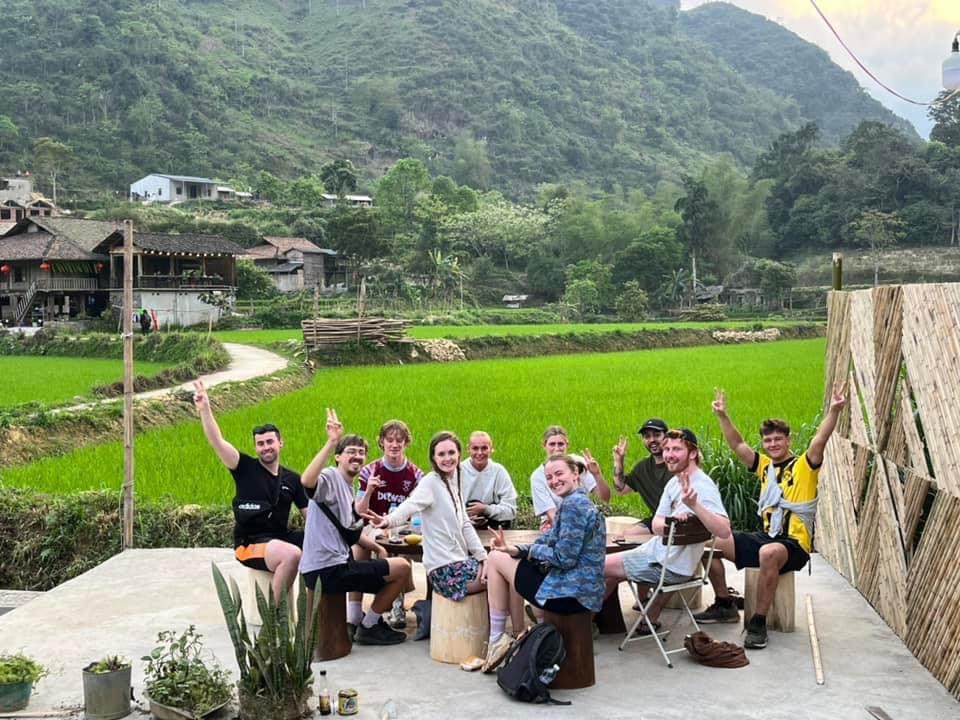
Du Gia is a good example. The site describes Du Gia homestays as peaceful Tay-village stays with wooden stilt houses, rice-field views, and access to the waterfall and surrounding mountains. That sounds wonderful for a night on the loop, but it also tells you what kind of setting you are in: a beautiful rural overnight stop rather than a modern town center. If your priority is silence, scenery, and village atmosphere, Du Gia is ideal. If your priority is dependable video calls, it is smarter to keep your expectations modest.
Is WiFi good enough for remote work?
For light tasks, sometimes yes. For full remote-work reliability, it is better to be cautious. If all you need is messaging, checking tomorrow’s plan, or uploading a few photos when the network behaves, many travelers will be fine. But if you need long Zoom calls, heavy uploads, or uninterrupted work blocks, Ha Giang village homestays are usually not the best environment to depend on. That is less about any one property and more about the overall reality of mountain travel in remote northern Vietnam. The site’s beginner and route guides consistently frame the region around remote villages, mountain passes, and limited connectivity in certain areas.
A better strategy is to do the important online tasks before you leave Ha Giang City, then treat the village nights as lighter-connectivity time. If you know you need one stronger internet window during the route, Dong Van is usually a more sensible place to plan around than a deeper village stop. That is a practical inference from the site’s accommodation pattern: town stays and hostels cluster in Ha Giang City and Dong Van, while the more atmospheric village homestays are spread farther out.
What should you do before checking in?
The safest approach is to prepare as if WiFi may be weak that night, then be pleasantly surprised if it is better. Before leaving a strong-signal town, download your offline maps, save screenshots of your booking details, and back up anything important from your phone. The site’s beginner packing advice already emphasizes carrying a phone and backup charger, and the wider route guidance recommends treating the mountains as a place where connectivity can be limited. That advice applies just as much to homestay nights as it does to the road itself.
It also helps to bring a power bank. Weak-signal environments often drain batteries faster, because phones work harder searching for connection. So even if the WiFi is acceptable, your battery can still disappear quickly if you are navigating, translating, messaging, and taking photos all day.

Which kind of stay makes the most sense if internet matters?
If WiFi is one of your top priorities, the simplest choice is to lean toward Ha Giang City, Dong Van, or other larger overnight stops first, then treat village homestays as the scenic part of the journey. The accommodation guide breaks Ha Giang stays into three broad categories: hostels and backpacker stays, homestays, and hotels/lodges. Hostels are concentrated mostly in Ha Giang City and Dong Van, while homestays spread into quieter villages. That makes the city-and-town end of the spectrum the safer bet if connection matters more than immersion.
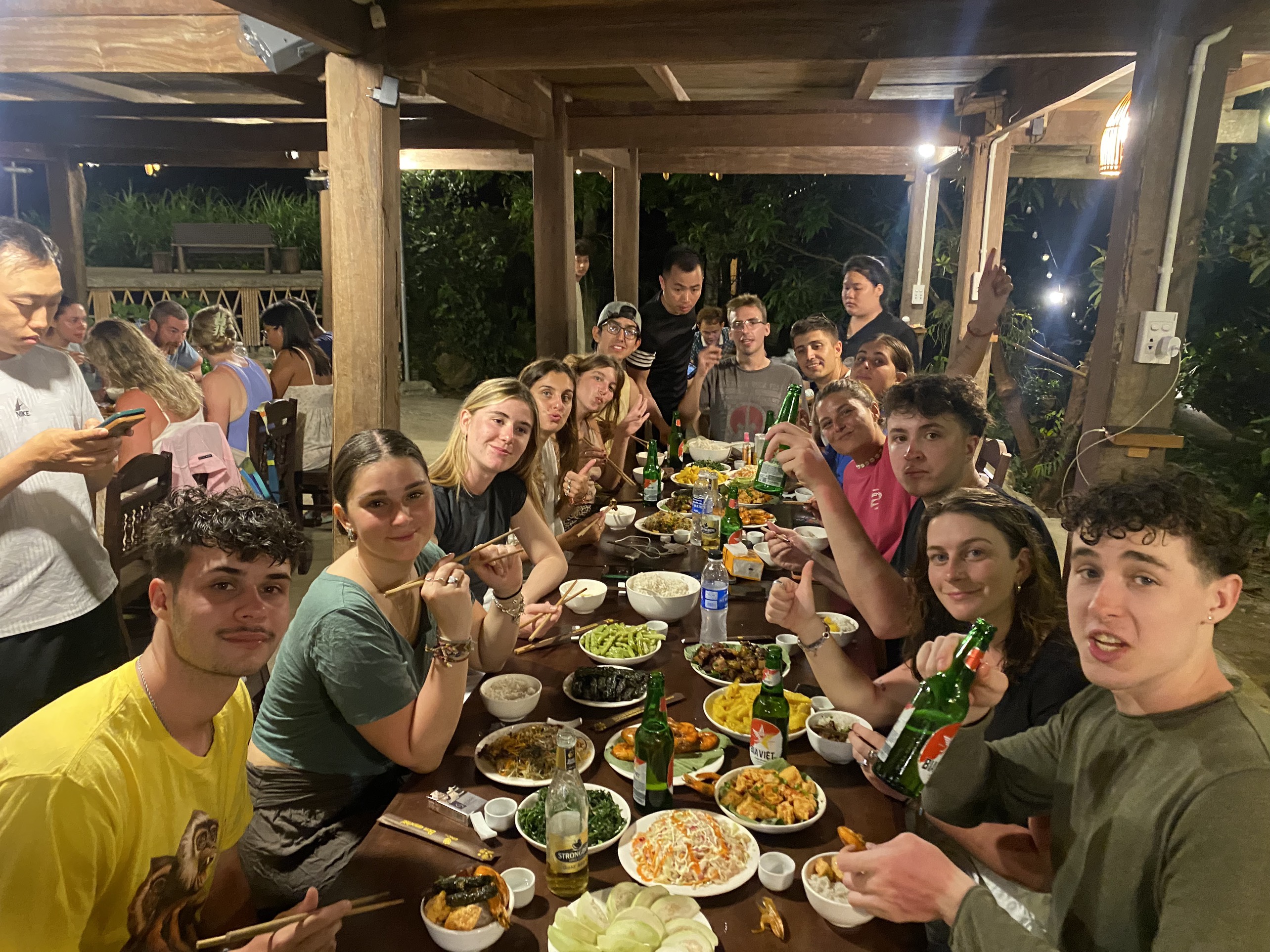
If, on the other hand, your main reason for coming to Ha Giang is to experience local culture, village meals, mountain views, and a more atmospheric overnight stop, then homestays are often the better choice even if the WiFi is only average. That is exactly how the site positions them: not as business hotels, but as a way to stay inside the landscape itself.
How this affects route choice
This is one of the small reasons route length matters. On the live site, 3 Days Ha Giang is the shorter, tighter version, while 4 Days Ha Giang is the slower option with more room for village stops, cultural experiences, and a more relaxed pace. If you are the kind of traveler who wants time to sort your signal, photos, and downloads without feeling rushed, a 4-day structure tends to feel easier. If you just want to move efficiently and are happy to disconnect more, the 3-day format can still work very well.
That is also where a small planning decision can make the whole trip smoother: if you know connectivity matters, choose a route style that gives you a calmer rhythm and keep the “important internet tasks” for the town-based nights. The mountain nights are then free to be what they do best - quiet, scenic, and memorable.
Final thoughts
So, what is WiFi in Ha Giang homestays really like? The simplest answer is: often available, sometimes useful, but not something you should overestimate - especially in remote village stays. If you need stronger internet, plan around Ha Giang City or Dong Van. If you choose a homestay in places like Du Gia, Nam Dam, or other village areas, go in expecting atmosphere first and connectivity second.
That balance is part of what makes Ha Giang special. You come for the mountains, the local culture, the shared dinners, and the feeling of being a little farther from the modern rush. If you prepare for patchy WiFi instead of assuming perfect internet, you will almost always enjoy the homestay experience much more.