

If you’re dreaming of misty mountains, tiny wooden houses and rolling layers of green and gold, the Ha Giang rice terraces should be at the top of your Vietnam bucket list. The most iconic terraces lie in Hoang Su Phi district, on the western edge of Ha Giang province, where ethnic minority communities have carved rice fields into steep slopes for centuries.
This guide will walk you through where the terraces are, the best time to visit, the top viewpoints and villages, plus travel tips to help you plan an unforgettable trip.
Perfect Tours for You:
Where are the Ha Giang rice terraces?
When people talk about Ha Giang rice terraces, they’re usually referring to the spectacular terraced fields of Hoang Su Phi, about 110 km west of Ha Giang City and roughly 300 km from Hanoi.
The terraces spread across more than 3,000 hectares of steep mountainsides and valleys, mainly in communes and villages such as Ban Luoc, Ban Phung, Nam Ty, Ho Thau and Thong Nguyen. In 2012, these Hoang Su Phi rice terraces were officially recognized as a national scenic heritage site by Vietnam’s Ministry of Culture, Sports and Tourism, underlining both their natural beauty and cultural importance.
Compared with more famous rice-terrace destinations like Sapa or Mu Cang Chai, Hoang Su Phi remains far less touristy and feels wonderfully remote, with small villages, simple homestays and quiet mountain roads.

Best time to visit Ha Giang rice terraces
The Ha Giang rice terraces are beautiful all year, but each season offers a different mood. Most travellers plan their trip around three main periods:
Water season (March – May)
At the start of the farming cycle, the terraces are flooded. The paddies mirror the sky, clouds and surrounding peaks, turning the mountainsides into huge natural mirrors. This is a magical time for photographers who love reflections and soft morning light.
Green season (June – August)
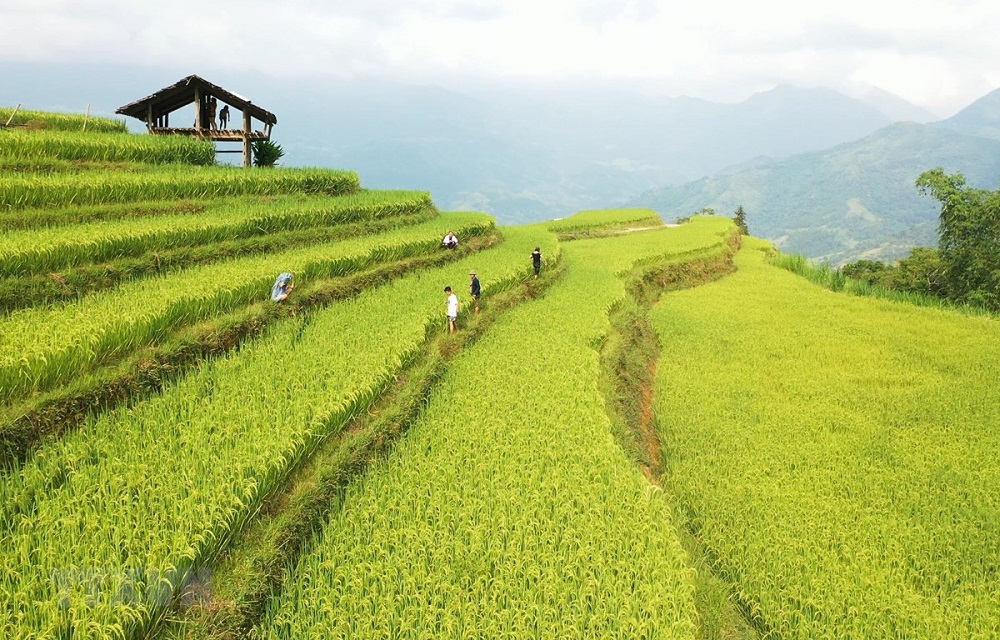
By early summer, young rice plants turn the terraces into endless layers of bright emerald. The air is warm, the fields are lush and alive, and you’ll often see farmers working in the paddies with water buffalo. This is also a great time for trekking through villages and fields.
Golden harvest season (September – mid-October)
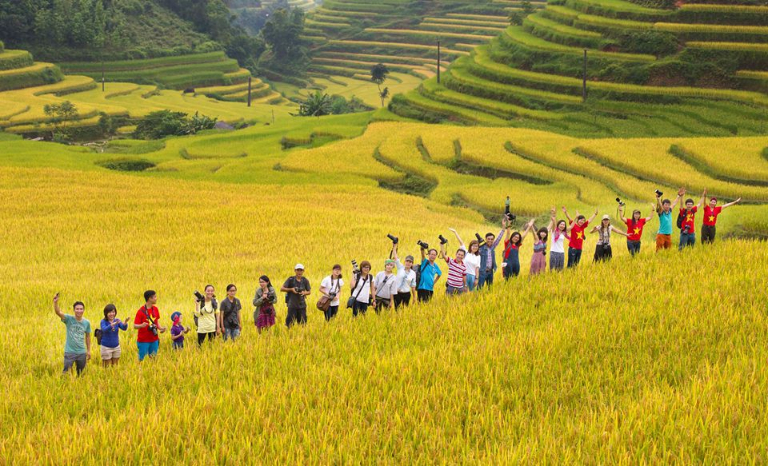
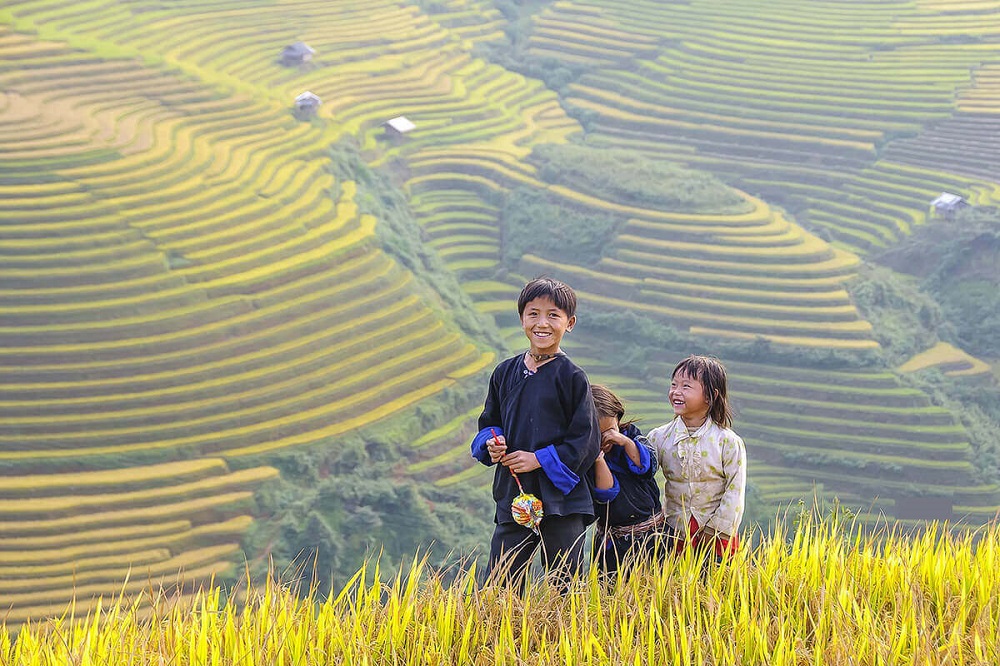
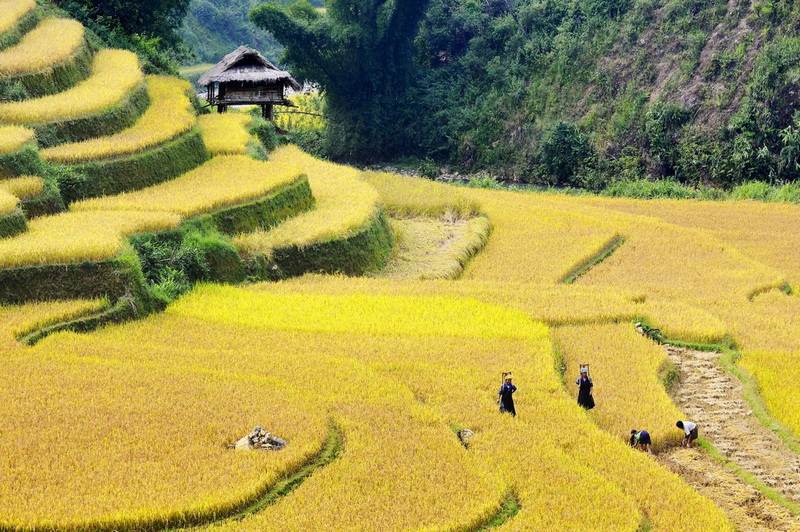
This is the most famous time to visit the Ha Giang rice terraces. As harvest approaches, the fields shift from green to rich shades of yellow and gold, especially around late September and early October. The contrast between golden rice, dark mountains and blue sky makes it one of the most spectacular landscapes in northern Vietnam.
If you travel between November and February, you’ll see bare terraces and cooler weather, sometimes with fog. While it’s less colorful, the stone walls and structure of the fields are more visible, and the atmosphere is quiet and moody.
Top places to see Ha Giang rice terraces in Hoang Su Phi
Hoang Su Phi is full of viewpoints and villages, but a few areas are especially famous for their terraces:
-
Ban Luoc – Often called the “crown jewel” of Hoang Su Phi, Ban Luoc has some of the largest and most layered terraces, stretching across multiple mountain slopes.
-
Ban Phung – Known for terraces that seem to climb almost vertically towards the sky, with very steep, dramatic fields.
-
Nam Ty & Thong Nguyen – Beautiful valleys with rice terraces, rivers and villages of Tay, Dao and other ethnic groups, great for homestays and gentle walks.
-
Ho Thau & San Sa Ho – More remote areas with fewer visitors, good for longer treks and deeper cultural experiences.
Staying in one of these communes gives you sunrise and sunset views right from your homestay, as well as easy access to footpaths that wind through the terraces.
Culture and life around the rice terraces
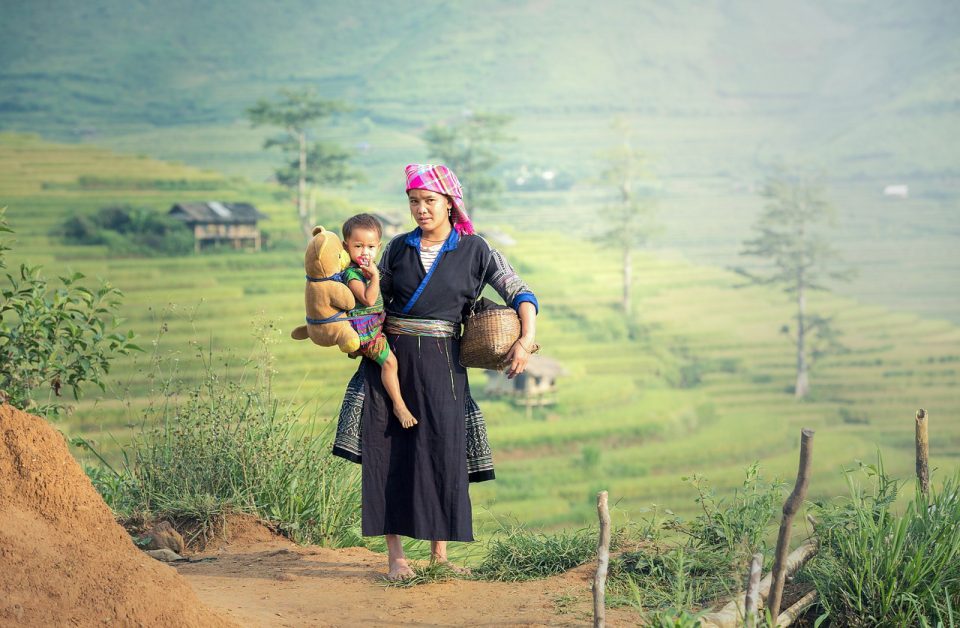
The Ha Giang rice terraces are not just a pretty landscape; they are a living agricultural system maintained by ethnic minority communities such as the Dao, Nung, Tay, Hmong and others.
Over generations, local farmers have engineered complex irrigation channels and bamboo pipes that carry mountain water from one terrace to the next, making the most of steep, rocky slopes. Many villages still follow a traditional farming calendar, planting and harvesting by hand, holding mountain markets and seasonal festivals tied closely to the rice cycle.
By staying in a family-run homestay, you can watch (or even help with) planting, weeding or harvesting, join in family meals, and learn how people here balance modern life with old traditions.
Things to do at Ha Giang rice terraces
Beyond simply admiring the view, there’s a lot to experience around the terraces:
Trekking and village walks
Hoang Su Phi is a paradise for hikers. Trails connect terraced hillsides, forests and small villages, offering everything from short walks to multi-day treks with overnight stays in local homes.
Photography
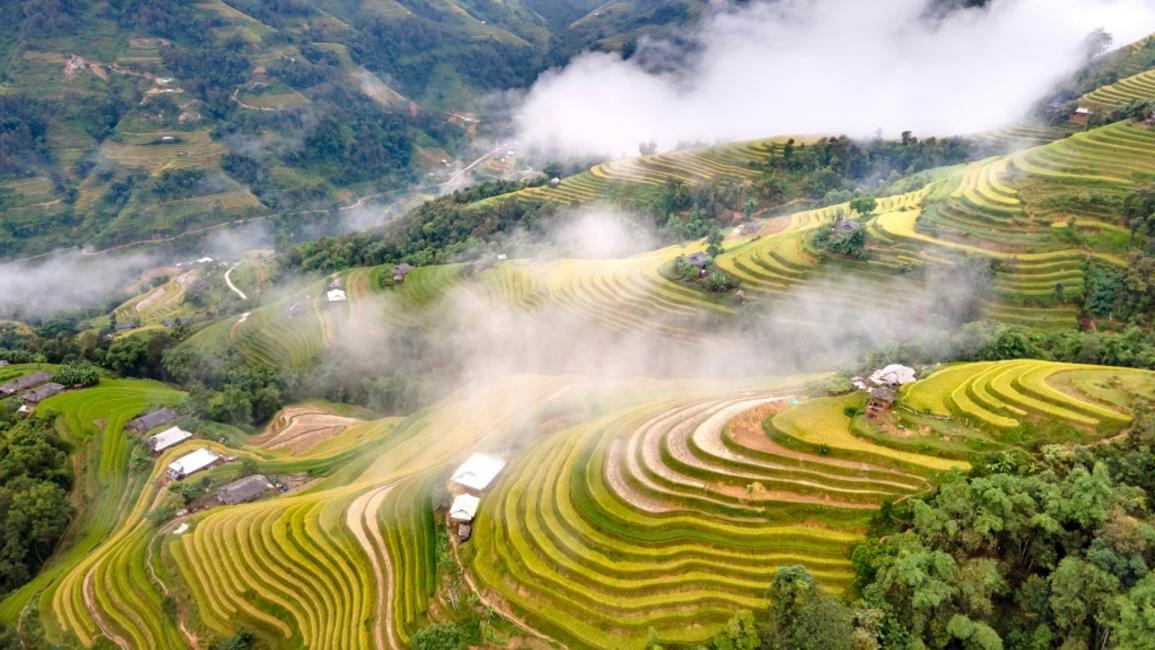
Sunrise and sunset are the best times to photograph the Ha Giang rice terraces, when soft light hits the fields and mist hangs in the valleys. Bring a wide-angle lens for sweeping views and a zoom lens for details like farmers working on individual terraces.
Local markets
Weekly mountain markets in communes like Thong Nguyen or Nam Ty are full of color, with ethnic groups arriving in traditional dress to trade produce, livestock, fabrics and household goods.
Side trips
If you have extra time, you can combine Hoang Su Phi with other Ha Giang highlights like Dong Van Karst Plateau Geopark, Tay Con Linh Mountain or even extend your loop to Ban Gioc Waterfall and Ba Be Lake.
How to get to Ha Giang rice terraces
Most travellers reach the Ha Giang rice terraces in two stages: Hanoi → Ha Giang City → Hoang Su Phi.
From Hanoi to Ha Giang City, you can take an overnight sleeper bus or a private car, which usually takes 6–8 hours depending on traffic and road conditions.
From Ha Giang City to Hoang Su Phi, the distance is around 80–110 km depending on your exact route. You can:
-
Rent a motorbike and ride along mountain roads with incredible scenery.
-
Book a private car or join a guided tour if you prefer not to drive.
-
Use local buses and then arrange onward transport to your homestay or village.
Roads are generally paved but can be steep and winding, especially in the rainy season, so always check the weather and your riding experience before deciding to drive yourself.
Practical tips for visiting Ha Giang rice terraces
-
Book early in harvest season (especially late September – early October), as homestays in the most scenic villages fill up quickly.
-
Bring good trekking shoes, a lightweight rain jacket and layers – the weather in the mountains can change quickly.
-
Respect local culture: ask before photographing people, dress modestly in villages and markets, and follow your host’s guidance on customs.
-
Cash is still king in many rural areas, and ATMs can be limited, so withdraw money in Ha Giang City or a larger town beforehand.
-
Try to travel responsibly: stay in locally owned accommodation, avoid leaving trash on the trails and support community-based tours where possible.
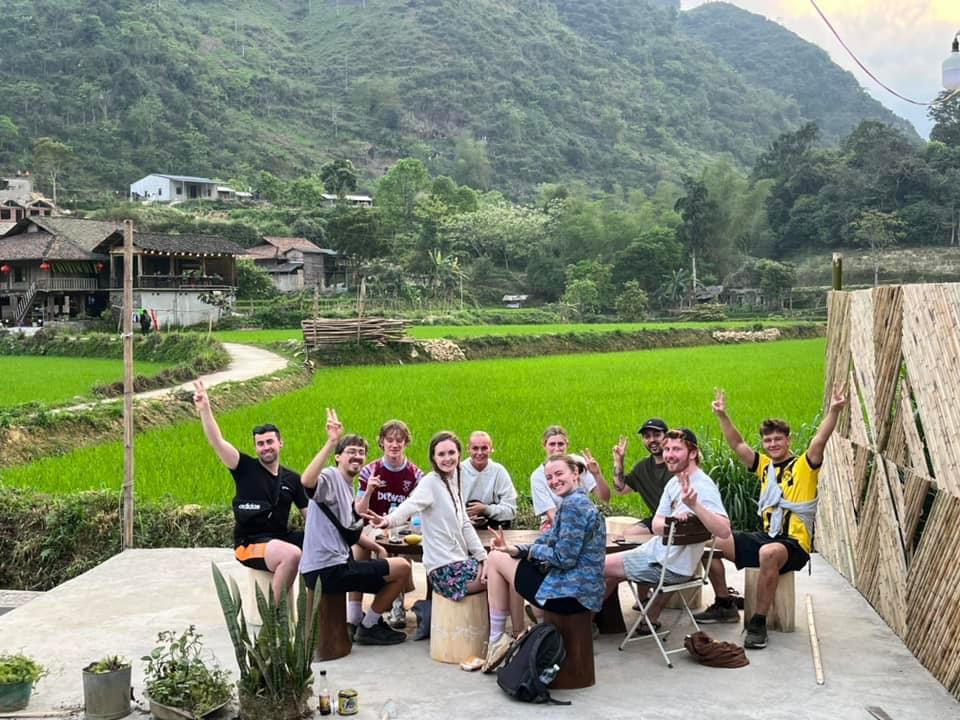
Final thoughts
The Ha Giang rice terraces of Hoang Su Phi are one of Vietnam’s most impressive examples of human and nature working together – combining dramatic mountain scenery with centuries-old farming traditions. Whether you come for golden harvest views, quiet green-season treks or cultural immersion in ethnic minority villages, this corner of Ha Giang rewards those willing to go a little off the beaten path.
If you’re planning a northern Vietnam itinerary, make room for at least a couple of days in Hoang Su Phi. Stand on a ridge above the terraces at sunrise, watch the fog lift from the valleys, and you’ll understand why many travellers say this is one of the most unforgettable landscapes in the country.
Ready to plan, get a price, or just ask questions?
👉 Call/WhatsApp The Loop Tours — Hotline: +84862443320